
HOW I LEARN - Joel Meyerowitz
From the multiple “entry points” within a street photograph to color, large-format cameras, and the photographer as a medium, Joel Meyerowitz helped me see that the real limits on expression often lie not in technique, but in how we look at the world and approach life.
01 - The Barrier
Summer has arrived. The weather is growing warmer, and everything seems to be coming back to life. In Beijing, spring is almost imperceptible; the city seems to leap straight into summer. In my memory, Beijing’s spring is always a little stifling. It does not last long, but it somehow feels gloomy. Once summer finally arrives, however, life becomes lighter.
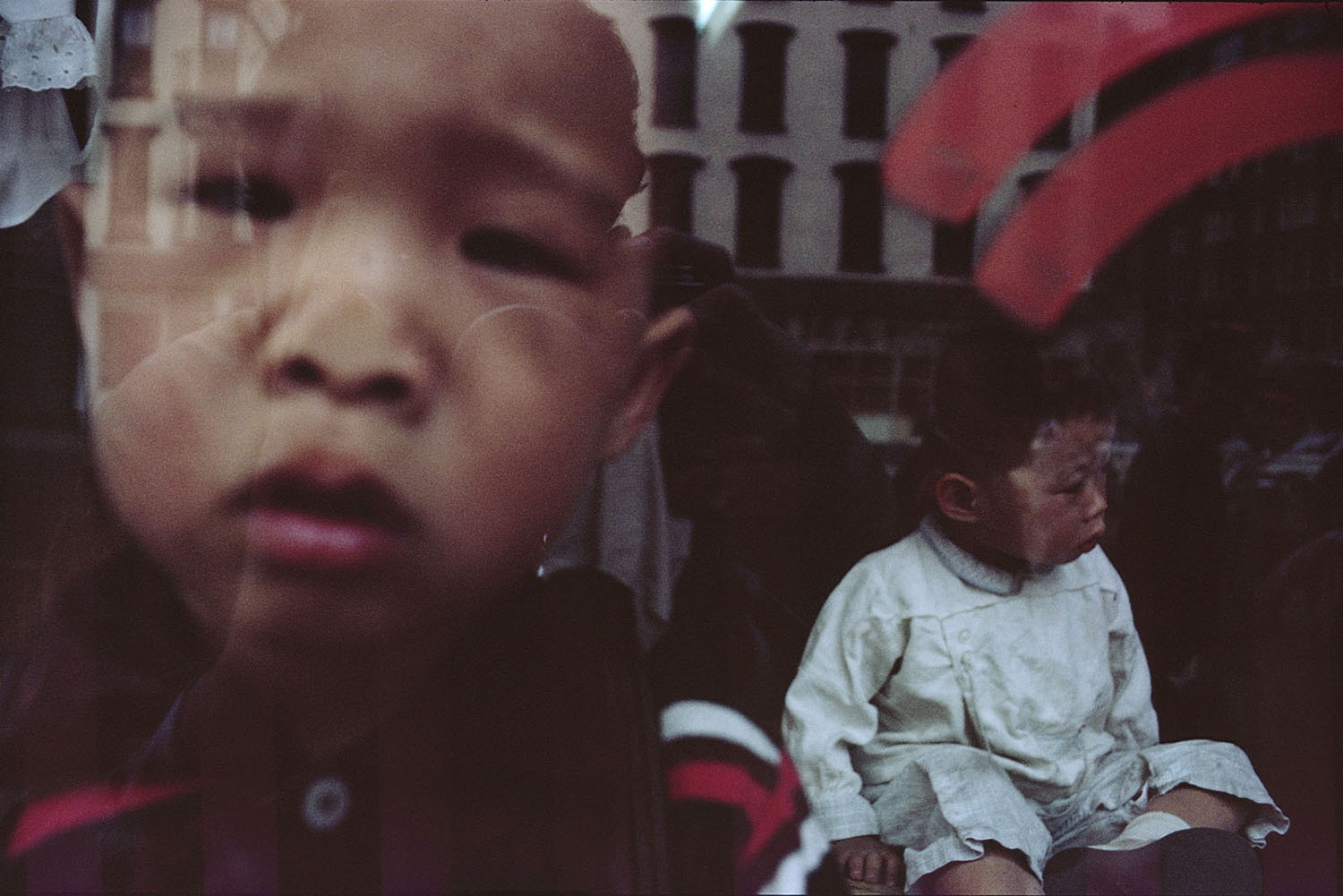
Photograph copyright Joel Meyerowitz
I have recently started reading books about photography because I have run into another “plateau” in my own work and want to slow down. Yet a plateau is really a barrier that is always there. I am no longer in a hurry to break through it, because whether I struggle against it or not, the obstacle will eventually collapse at the “right” time.
That is why I have been thinking about writing a text version of HOW I LEARN, perhaps with a video version as well. Videos often pack in too much information, contain too much rambling, and are difficult to search or archive. Although most people today place little value on writing, it remains more valuable for serious expression.
02 - Entry Points
Photography means something different to everyone, technically as well as artistically. Self-expression is difficult to calibrate, especially when it also asks for the viewer’s empathy. Street photography therefore tends to settle into recognizable types—or, more plainly, formulas. At this point, I want to escape the trap of “complex composition.” It looks technically difficult, but is not necessarily hard to perform. It is like religious painting before the Renaissance: with a teacher, an apprentice can learn the method; given enough time, even if that takes years, the student can eventually equal the teacher in intricacy and complexity.
So on the streets of China today, there are many photographers who are “better” than Alex Webb. I even feel that quite a few Chinese photographers have “surpassed” him. That is only from a technical perspective, of course. A copy, after all, remains a copy.
Photograph copyright Joel Meyerowitz
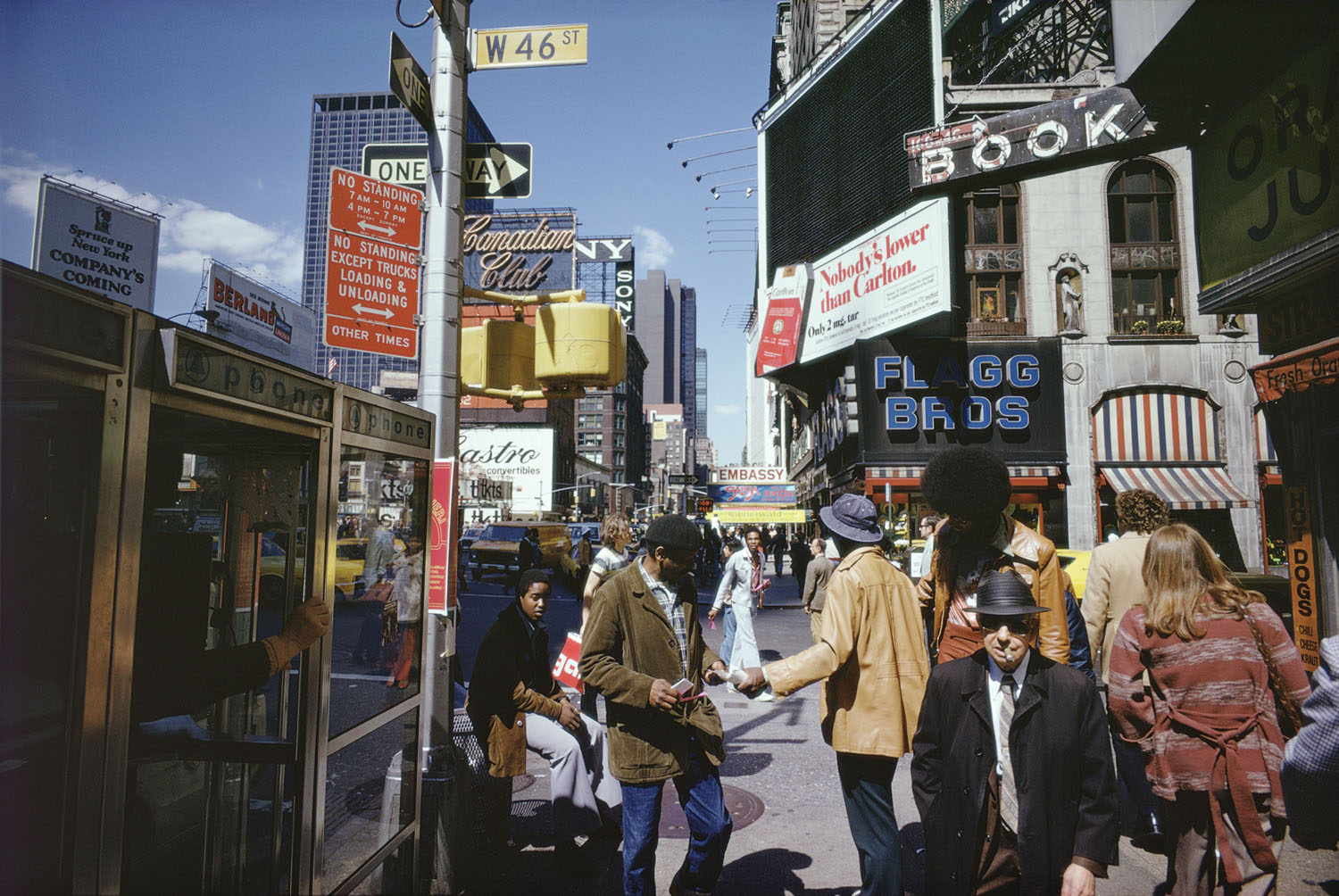
I am not recommending Joel Meyerowitz because photography today is “too orderly.” I simply find his work fresh, and freshness is extraordinarily rare. His photographs can look chaotic at first, yet they have been freed from the decisive moment and form an order of their own. In the language of photography critics—and of Meyerowitz himself—this is an image with countless points of entry.
If we study this image closely—and carefully looking at a photograph now seems to be a virtue in itself—the elderly man in the lower right, smoking in a black hat and black suit, can be one entry point. His period clothing and all-black appearance set him apart from everyone else and give us endless cause for curiosity. But if we ignore him, the person nearby in a yellow jacket and blue hat, apparently making a “transaction,” can become another entry point. We can erase the old man from our attention and treat the photograph as a glimpse into some illicit street deal. Beside them, a Black woman watches impassively, as if nothing that happens on the street has anything to do with her.
One of the first things every photographer learns is that there is a frame—a fixed frame. Most people work with a fixed format, usually 35mm.
So how do you make your work different from anyone else’s? It comes down to what you put in the frame and where you cut into the full 360 degrees around every axis of vision. It is a spinning web of 360-degree arcs, and you keep moving the frame through it.
Although this photograph can be seen as a group portrait of the street, the billboards and road signs do not feel intrusive. Instead, they give the whole frame balance. Their many colors echo the clothing of the pedestrians, as if the signs and advertisements were also characters in the scene. If our eye first lands on an advertisement or sign, the arrows guide us onward toward the shops across the road and the crowd in the street.
Video related to Joel Meyerowitz
By now, you may find my interpretation a little forced and feel an impulse to resist it. Even so, the balance of the entire image is visible, whether it was intentional at the moment of exposure or discovered later through editing and selection.
03 - Color
Photograph copyright Joel Meyerowitz
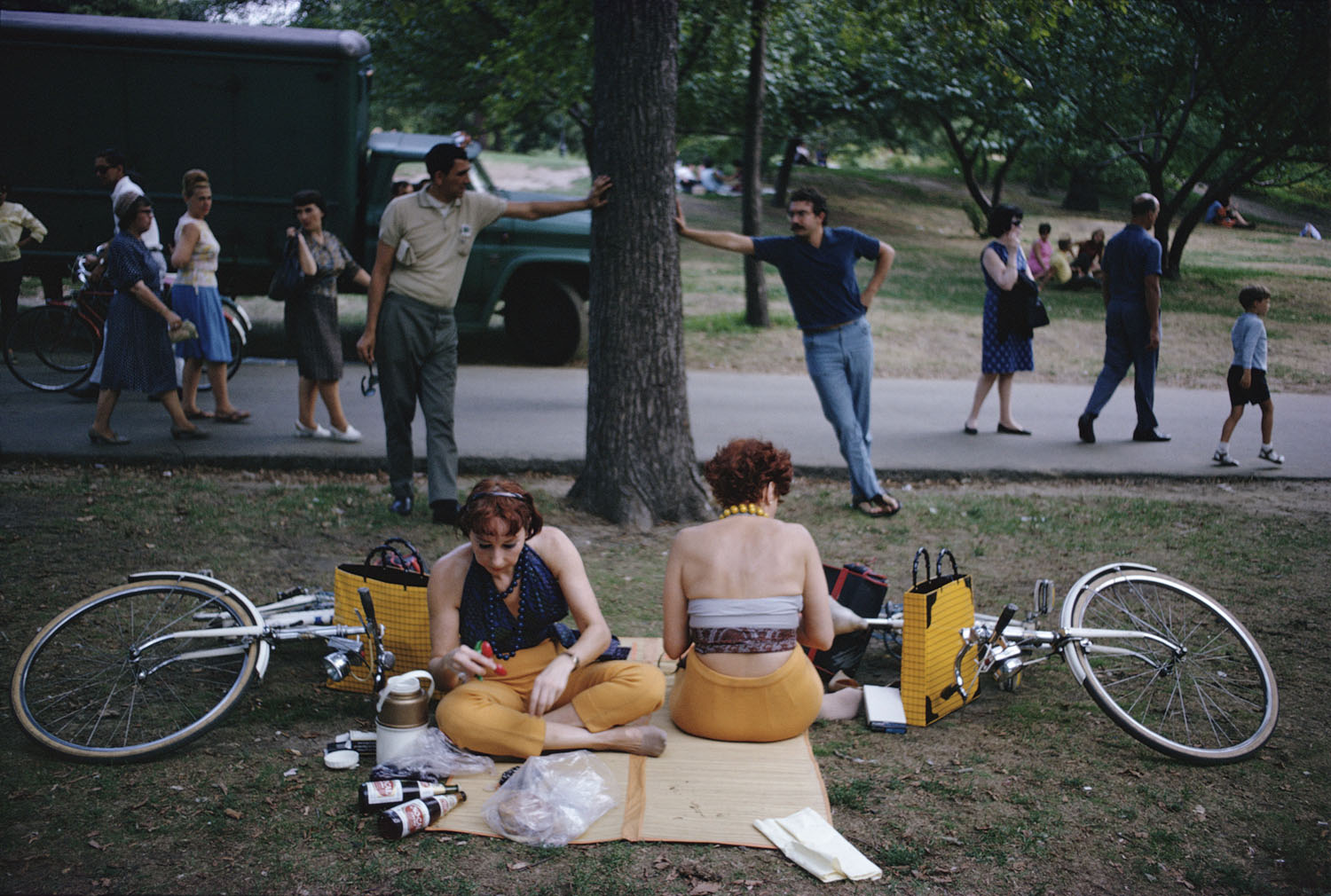
Today, choosing whether to photograph in color hardly seems like a serious dilemma, nor is color seen as a constraint on artistic expression. At the time, however, color photography was considered cheap. Joel Meyerowitz still chose to work with 35mm color film because he believed it would bring him “closer to reality,” even if that idea sounds a little strange today.
Many photographers still choose black and white, and I photographed exclusively in black and white for roughly three or four years. I did not choose it because it was inherently more artistic—though I believe many photographers do choose it for artistic reasons. I chose it because black and white was my comfort zone. The colors of the street felt too chaotic, and I could not handle them well. Put simply, I “didn’t know how to photograph in color,” so I retreated into the black-and-white world. Recently, of course, I have begun experimenting with color too.
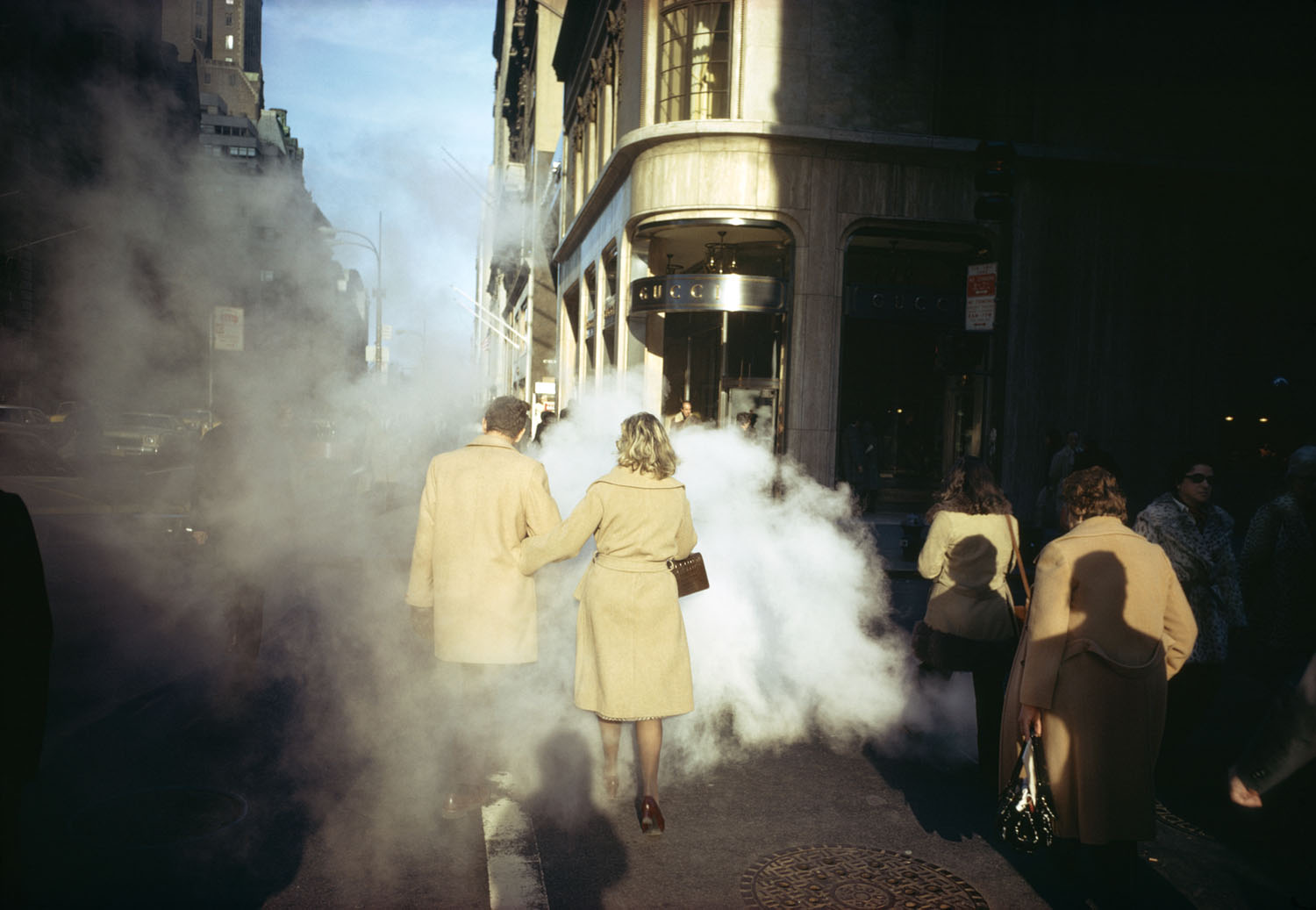
Adding color to a frame can throw the whole structure out of balance. We often pay attention to “conventional composition,” such as the rule of thirds or the golden ratio. When we tire of those ideas, we may turn to “complex composition,” yet still fail to create a genuine balance among the colors themselves.
In other words, we overlook the composition—or design—of color.
Photograph copyright Joel Meyerowitz
04 - Using Large Format
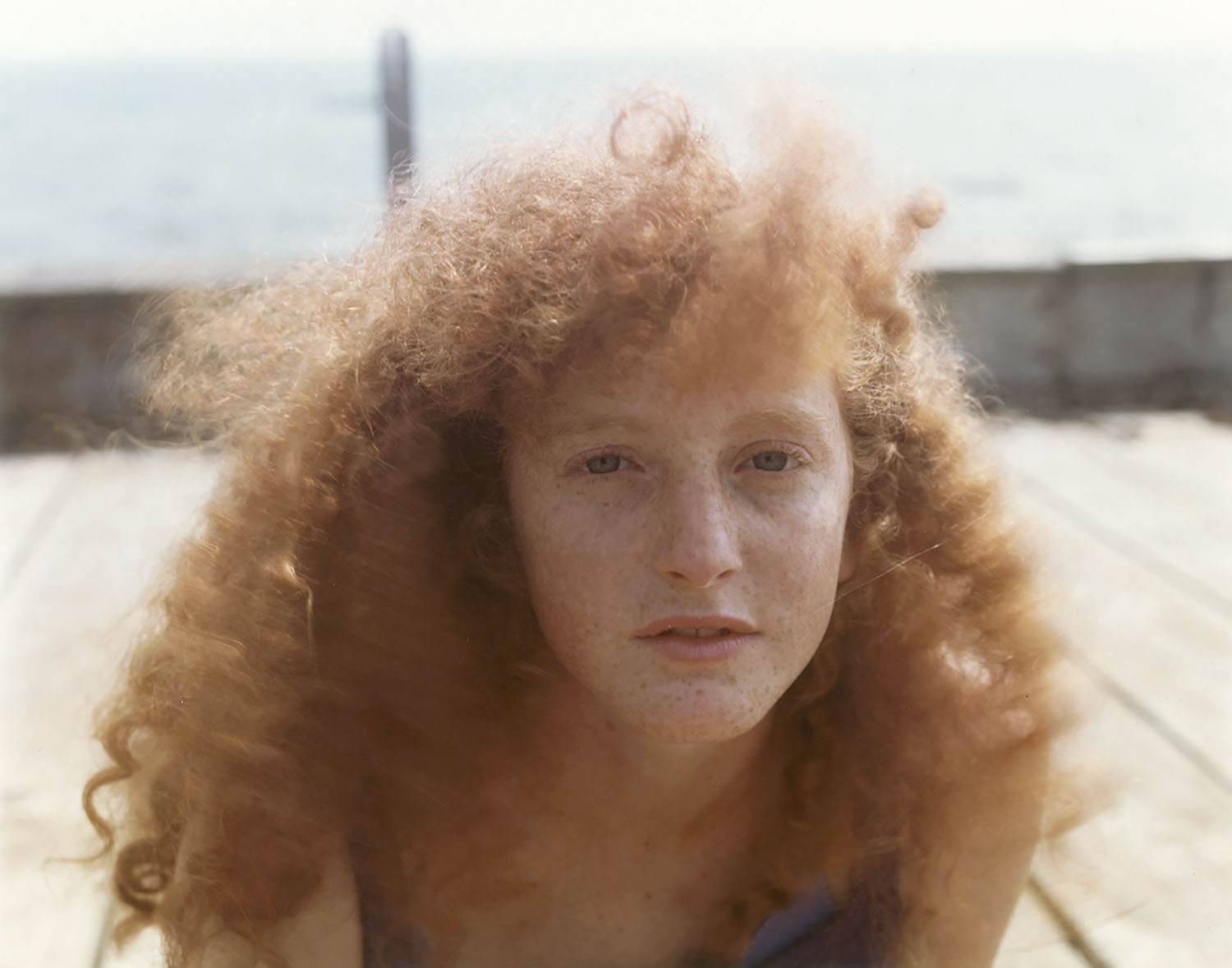
People often say, “The equipment does not matter; the mind behind it is what counts.” I find that claim irresponsible. If you actually use different tools, you discover that each gives the photographer a completely different experience. That experience changes how the photographer behaves, which in turn changes the relationship between the photographer and the environment.
Photograph copyright Joel Meyerowitz
Joel Meyerowitz later tried photographing the street with a large-format camera because he felt that he “needed to think carefully about what the objects in the frame were” and “needed to communicate more with people.” Street photography with a large-format camera is nearly impossible, so the photographer has to become calmer and maintain distance from the subject. That distance is psychological as well as physical.
I often use a medium-format camera myself. Today, digital medium format is remarkably convenient: you can see the point of focus and the image in real time, then review the finished photograph immediately and know whether you made a mistake. Several decades ago, medium- and large-format cameras were far more difficult to use. Photographers therefore had to slow time down, merge into their surroundings, and remain calm—even if that calm was initially a technical necessity.
The 8×10 taught me reverence, patience, and meditation. It added another dimension to the scene, and the pictures became the product of two conditions: awareness and time. I had to change the discipline I had developed earlier. Every artist’s growth involves giving something up to gain something else. You give up your prejudices and preconceptions; if you refuse, you do not grow. You remain where you are.
Using a large-format camera for portraits demands even more communication. Making a single exposure is already technically difficult. If the subject must wait, much of the technical preparation has to be completed beforehand, and the photographer must communicate carefully throughout the session.
05 - Professional and Amateur
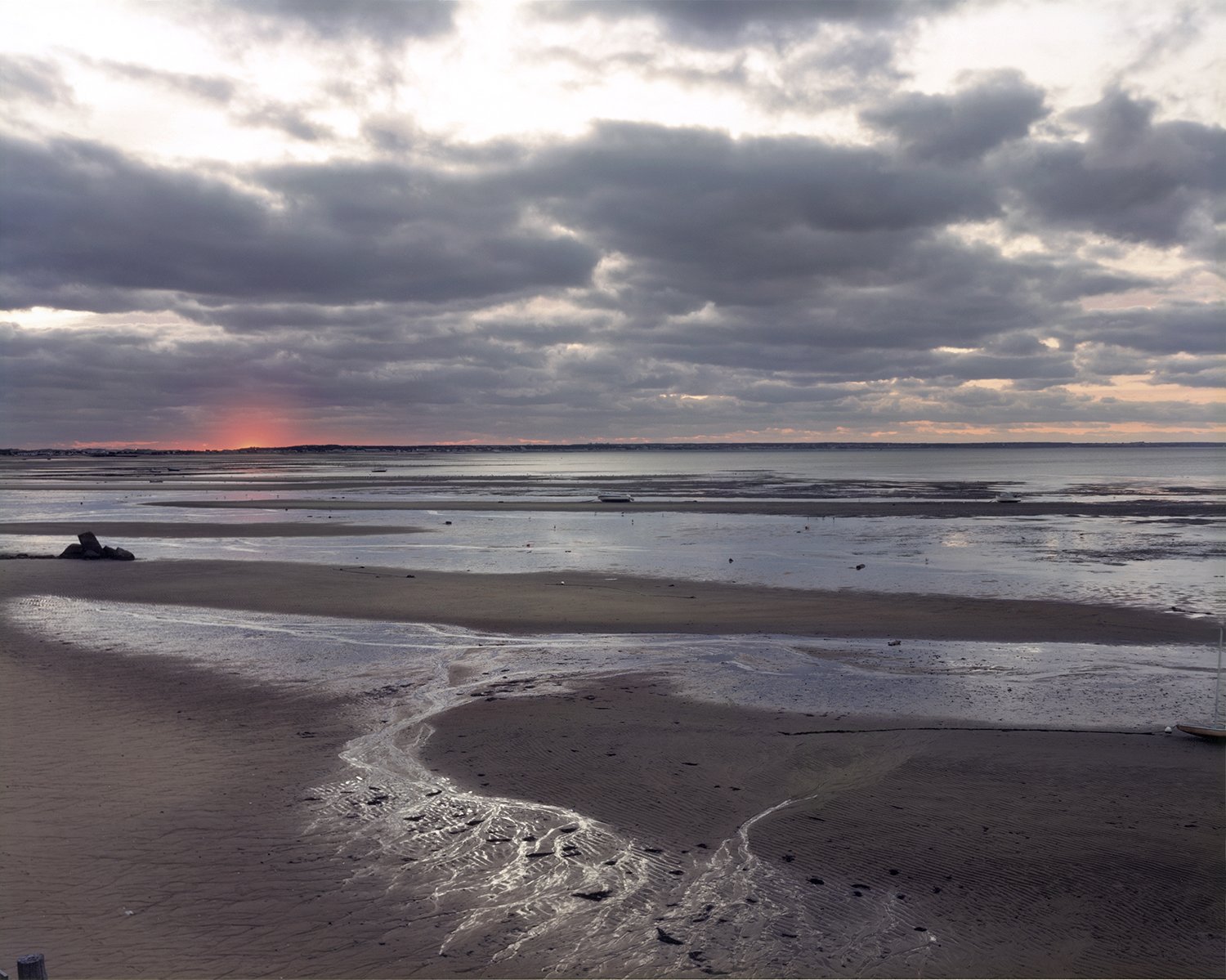
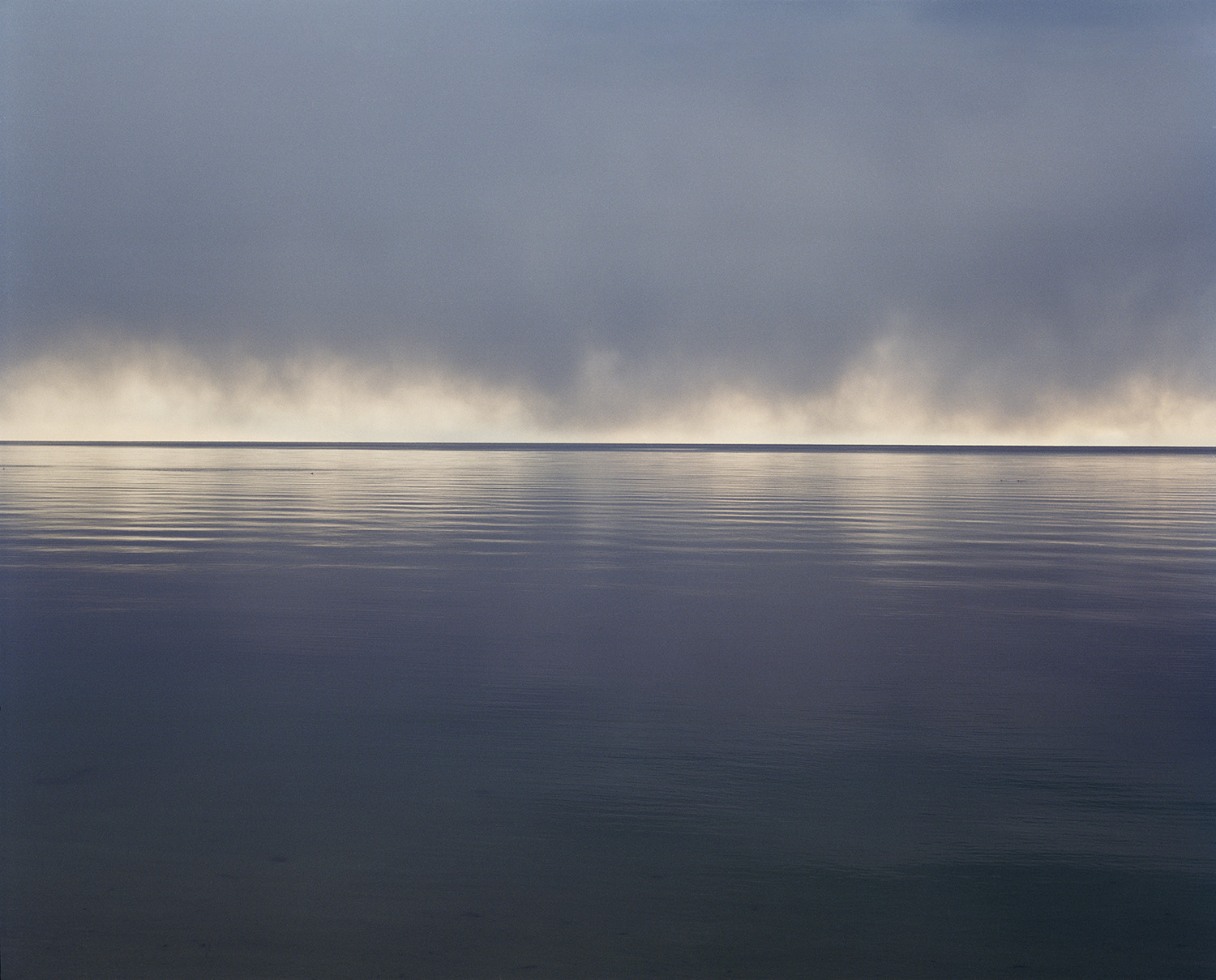
Different formats can also change the subject, create different points of view, and lead to different projects. Although Joel Meyerowitz considered himself a street photographer, he also made many landscapes with a large-format camera. Those photographs, he said, “gave me a different way of seeing the world.”
Photograph copyright Joel Meyerowitz
I do not particularly like defining myself, nor do I like defining photography. It is as though a street photographer is not allowed to make portraits or landscapes, and a landscape photographer is not allowed to photograph the street. Everyone today seems expected to become “professional,” yet I think professionalism can also mean “restriction” and “stagnation.” “Amateurs” look for ways to become “professionals,” while professionals are often looking for ways to become amateur again.
That may sound irresponsible, but expressing this kind of “amateurism” actually requires more professional technique and skill. The psychological boundary between professional and amateur may be blurred, but the distinction in expression and technique remains clear.
Photograph copyright Joel Meyerowitz
06 - The Self as Medium
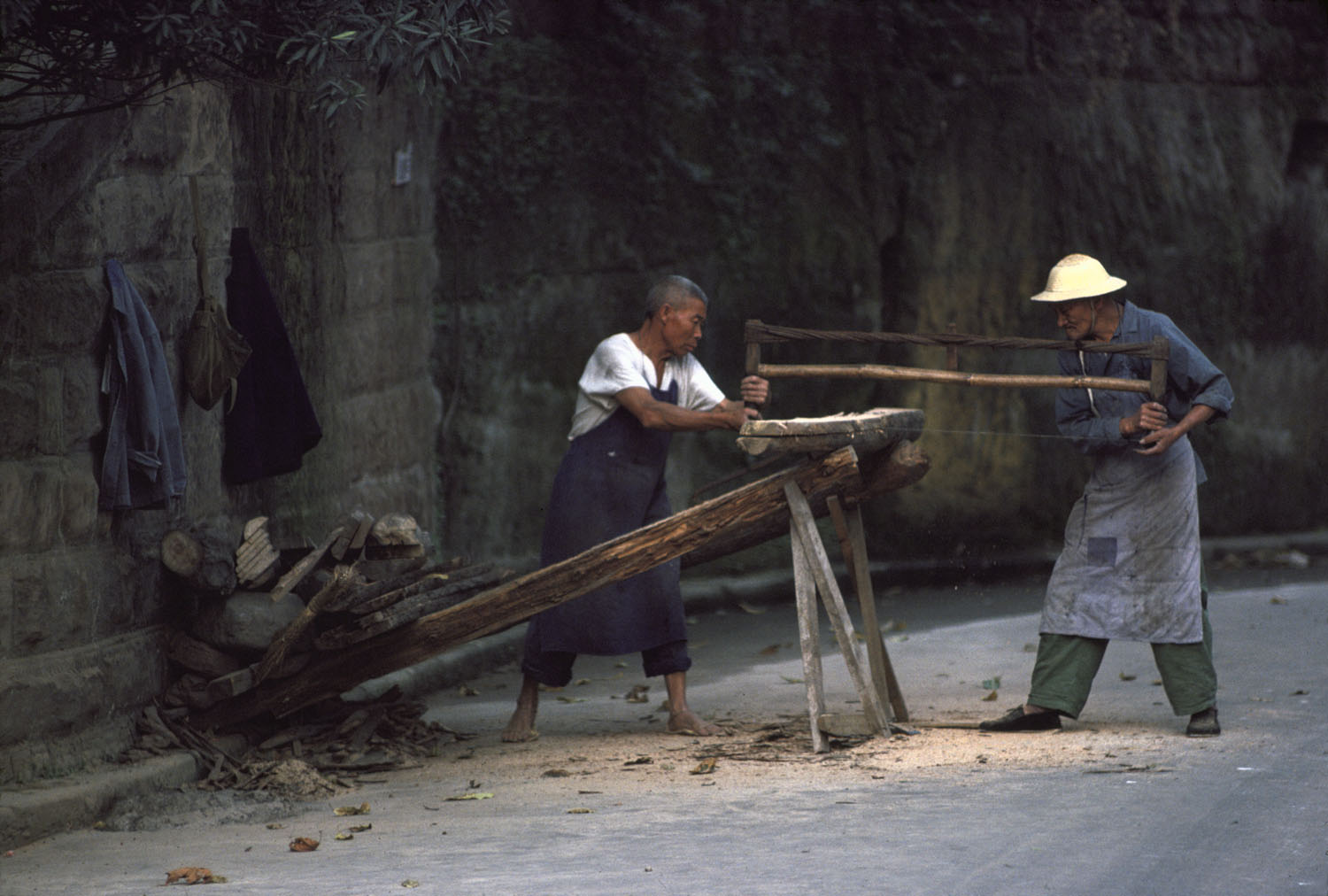
What is the medium of photography? Many people might say the negative—whether film or digital—or perhaps the model. Joel Meyerowitz believes that photography’s medium is the photographer’s own self. The statement may sound ordinary after so much familiar photographic wisdom, but his interpretation is more interesting: it concerns the relationship between the self and the environment.
Photograph copyright Joel Meyerowitz
Meyerowitz believes that the good image is already there, the camera is there, and all kinds of events are objectively taking place in the world. Whether a scene is good or bad has nothing to do with the photographer. The photographer can only distill its beauty. If they cannot see it, or cannot distill it for some other reason, then the medium does not exist.
A medium is a bridge. A broken bridge cannot connect anything.
I do not think of my photographs as works of art. I see them as fractions of a second in which my understanding and what the world offers somehow become unified. That makes possible an open experience that can be shared with whoever happens to see the photograph. It is not formal so much as experiential.
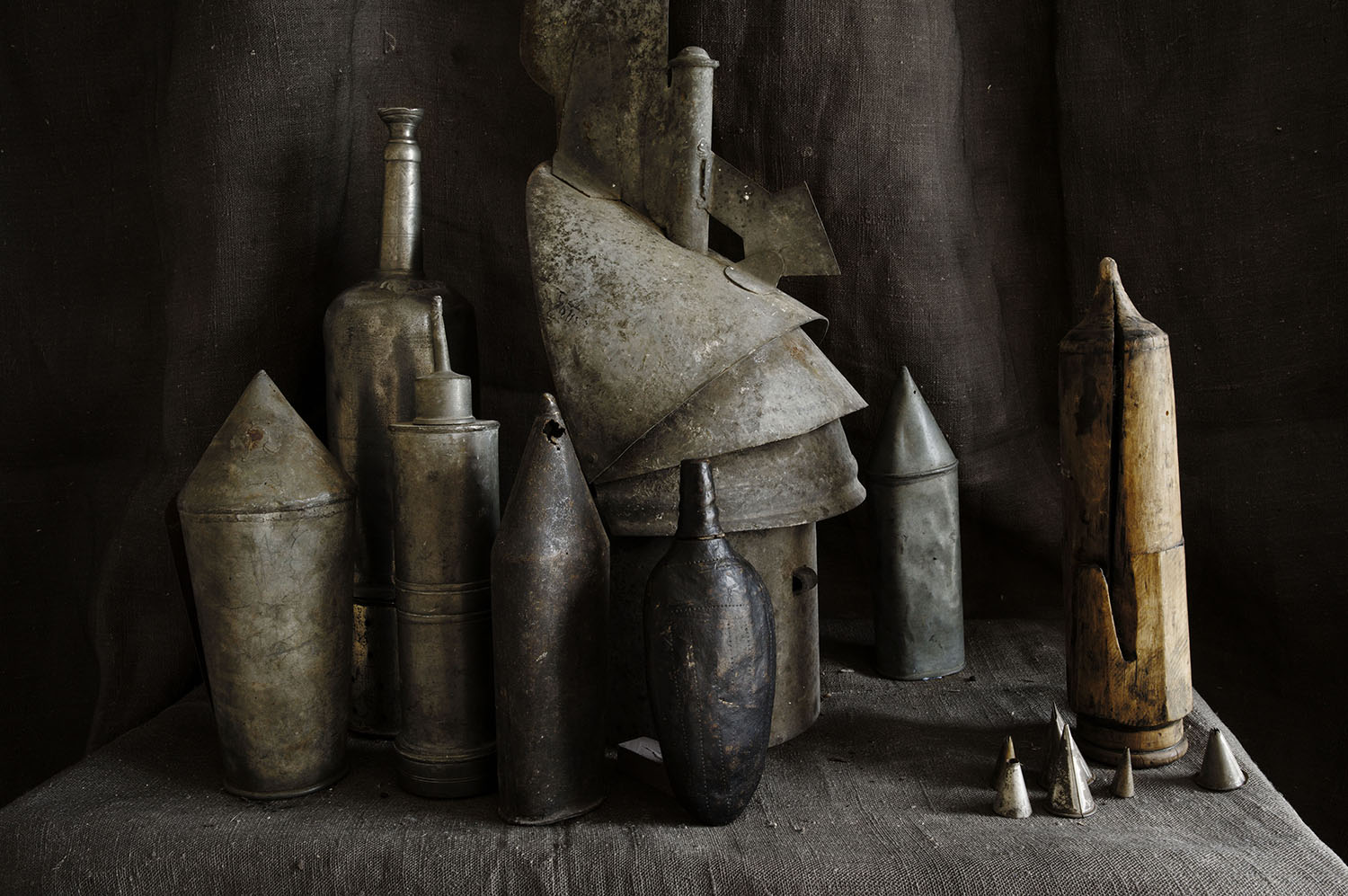
Photograph copyright Joel Meyerowitz
(The image above is a later imitation and interpretation of Renaissance still life.)
07 - Joel Meyerowitz
Joel Meyerowitz’s street photography can look excessively casual at first. He has no fixed genre and seems to photograph everything. He has also made many ordinary-looking images with heavy blur. Yet he does not regard his photographs as art, but as projections of how he observes the world. To me, that idea alone is artistic enough.
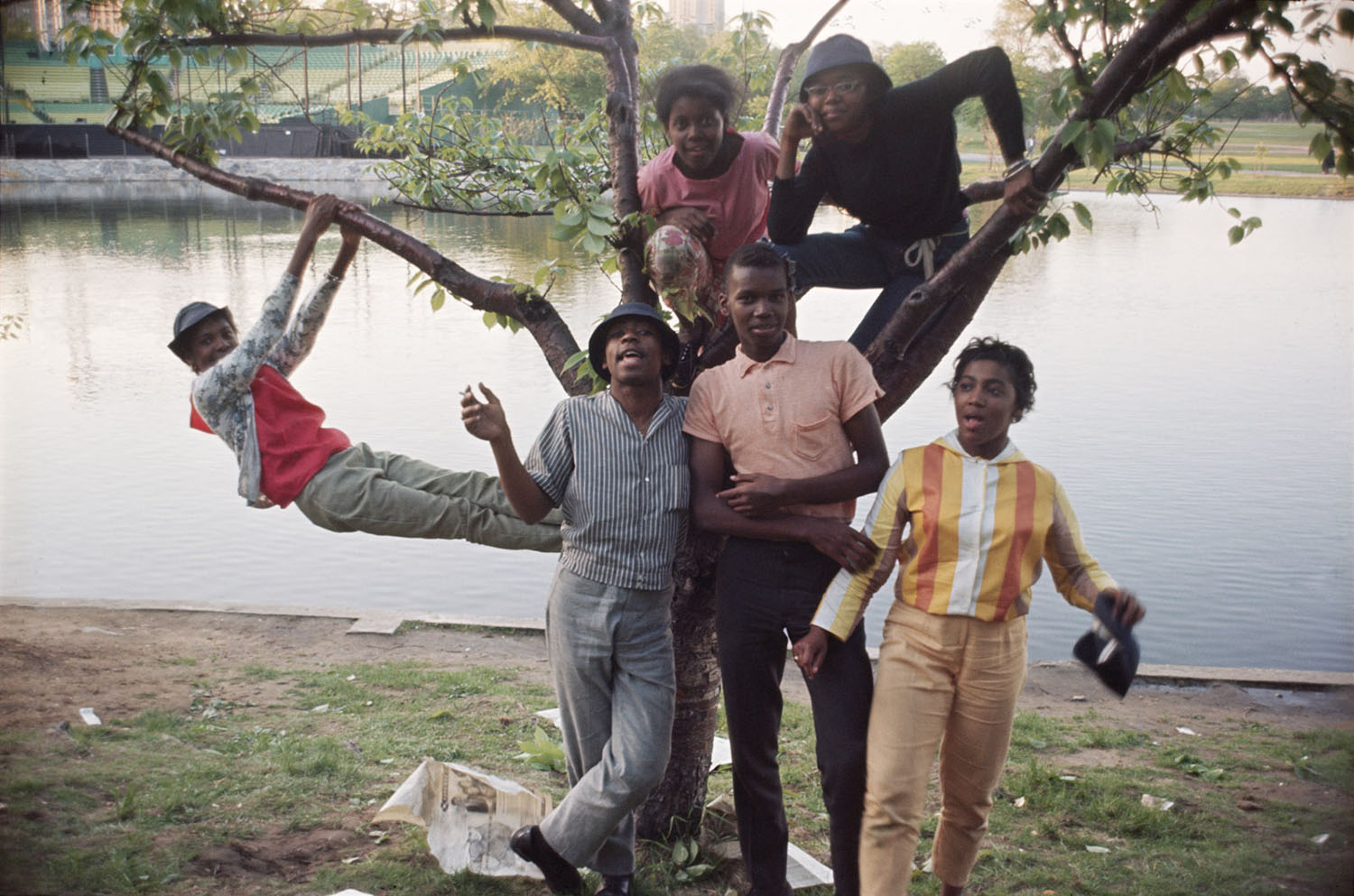
Photograph copyright Joel Meyerowitz
More than discussions of his technique, I prefer his attitude toward photography: trust life, because life is already good—“Trust life and keep hands off it”—and invest twenty years of yourself in photography. Looking back now, of course, he did not stop after twenty years. :)
After looking through his photographs, I realized that my pain and my “plateau” had little to do with photography. They came from my attitude toward life. I constantly put too much pressure on myself, in photography and everywhere else. That habit of squeezing myself affects every part of life. So if there is something I can learn from Joel Meyerowitz, it is persistence and optimism.
Technique can usually be mastered, and aesthetic ideas can be learned. Yet our attitude toward life and toward ourselves often determines our expression more profoundly. This is why I now want to put more effort into helping others: the light in other people can shine on me and change me. Perhaps that, too, is a kind of optimism.
One article cannot cover everything about Joel Meyerowitz in detail; I still have much more to learn about him. As I change, the way his work is reflected within me will also change. But the more deeply I understand him, the more strongly I feel his personal appeal. That appeal shaped his photography, and through it, affected the world.
This essay may have become too personal and emotional, so I will end with a more technical summary:
- The apparent chaos is not without a center. The frame still has points of entry. Freed from the decisive moment, the photograph can be entered from anywhere.
- Photograph in color to come closer to reality, even if that idea sounds slightly strange today.
- Try different tools, such as 35mm and large format. Large format slows you down and helps you find images that truly matter.
- Trust life, because life itself is good: “Trust life and keep hands off it.”
- The medium is not film, but the self. Everything has to pass through you; the photograph is your projection of life.
- Invest twenty years in yourself.
- Traditional street photography.
08 - Further Resources
Joel Meyerowitz’s official website