
HOW I LEARN - The Humor of “Death by Selfie” by Martin Parr
A photograph can be imperfect and still be irreplaceable within a project. What Death by Selfie teaches us is not merely how Martin Parr photographs people taking selfies, but how he uses a clear subject, disciplined editing, and a perfectly placed ending to turn everyday observation into a complete and humorous narrative.
In the previous essay, we looked at Martin Parr’s Magnum course The Last Workshop and discussed the distinctly British humor in his work. At first glance, his pictures can seem inexplicable and produce the feeling, “I could take that.” This is not the technical confidence we may feel before an accomplished landscape or portrait. It is closer to saying, “You are clearly taking random pictures. If that makes you a master, I could do it too.”
Today, Parr’s style may seem entertaining, but this humor did little to help him early in his career. When he first sought admission to Magnum, many photographers strongly opposed him and regarded his presence as a betrayal of the agency.
Martin Parr does not embody the Magnum spirit. He has none of the humanitarian engagement with society expected of a Magnum photographer. Accepting him would not simply add another member; it would admit a sworn enemy. Our vote decides how we understand and position ourselves. His membership would not increase our diversity but violate the very spirit that gave Magnum its standing.
Through Parr’s Death by Selfie, we can examine his understated humor and ask why this is such an entertaining and complete body of work.
01 - What Camera Do You Use?
When discussing Martin Parr, it is worth mentioning his camera. All right—allow me to laugh for a moment.
At Magnum, “What camera do you use?” seems almost a forbidden question. Asking it suggests that you have not yet understood photography. In recent years, Parr has mainly used Canon digital cameras with a 24–70mm red-ring zoom—a zoom lens, no less.
His method would also offend many traditional photography enthusiasts. On the street, he makes a huge number of exposures, repeatedly pressing the shutter, then returns home and finds several worthwhile photographs among a thousand pieces of “rubbish.” That is the day’s work.
I raise the question of equipment not because I truly want to discuss Parr’s camera. The point is that his way of observing and working involves equipment some people associate with beginners or conservative hobbyists, and photographs in which even the horizon is not straight.
As we have already noted, Parr nearly failed to enter Magnum because his photography was seen as a betrayal. Later, he became the agency’s president. That is an amusing turn in itself.
Parr has said on many occasions that photography is the process of finding good work in a pile of rubbish. The more rubbish you make, the more chances you have to find good pictures.
To capture these fleeting moments, you need the right shutter speed, the right balance—and this has become so much easier in the digital era. It is one of the great benefits of digital photography.
Most of the dancing pictures I take are rubbish. I go to a dance and think, “This is a great dance, but the pictures are rubbish.” They often do not work, but that is how it goes.
Judged by a rigid set of rules about equipment and technique, Parr could never qualify as a Magnum photographer. Some of his horizons are not even straight, so he might appear to lack the most basic credentials (laughs).
02 - What Is Your Subject?
After seeing this project, you may genuinely think, “I could take those photographs—perhaps even better ones.” To be honest, I do not completely disagree. I would merely shrug and add, “Well, in certain respects.”
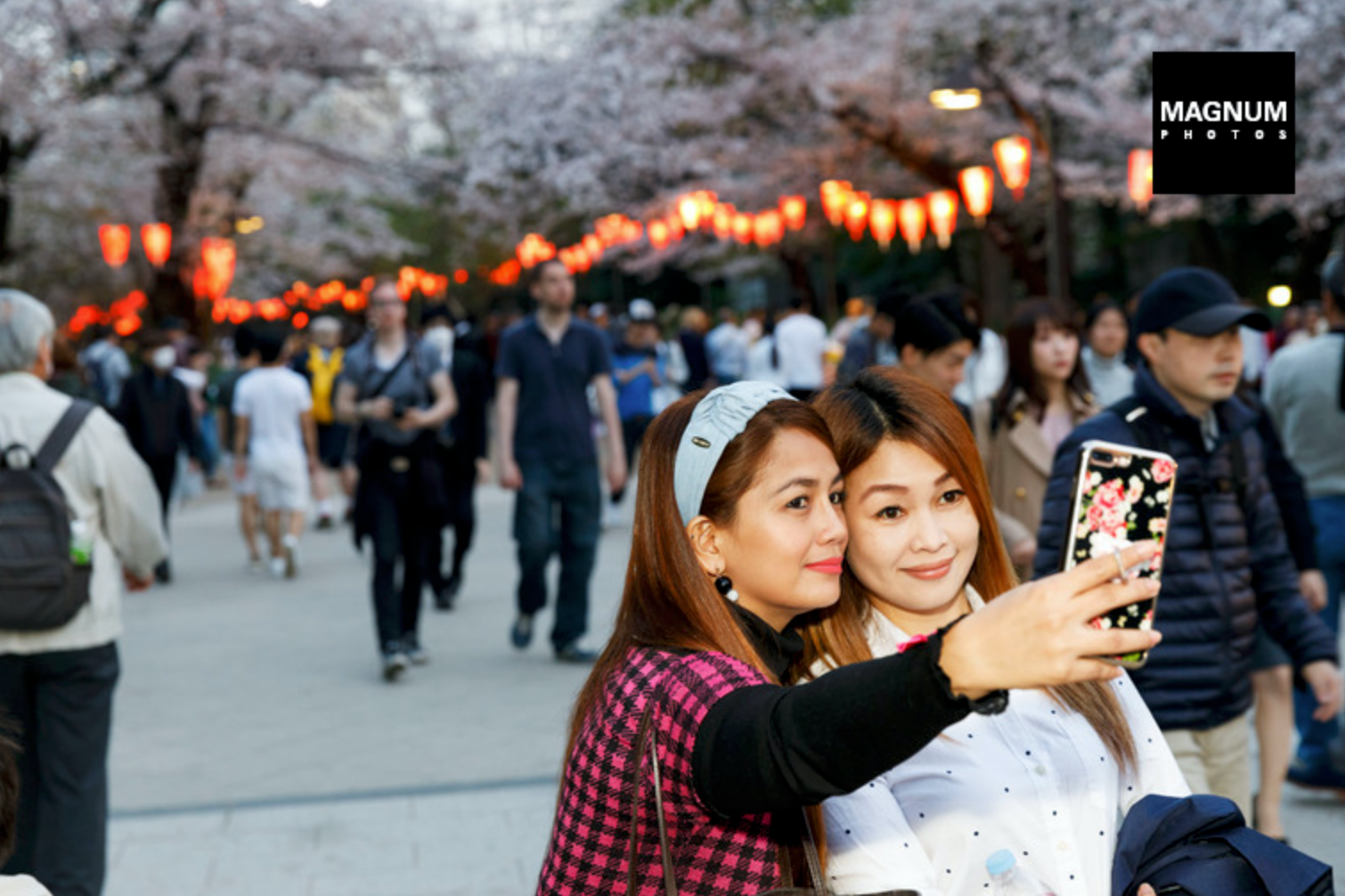
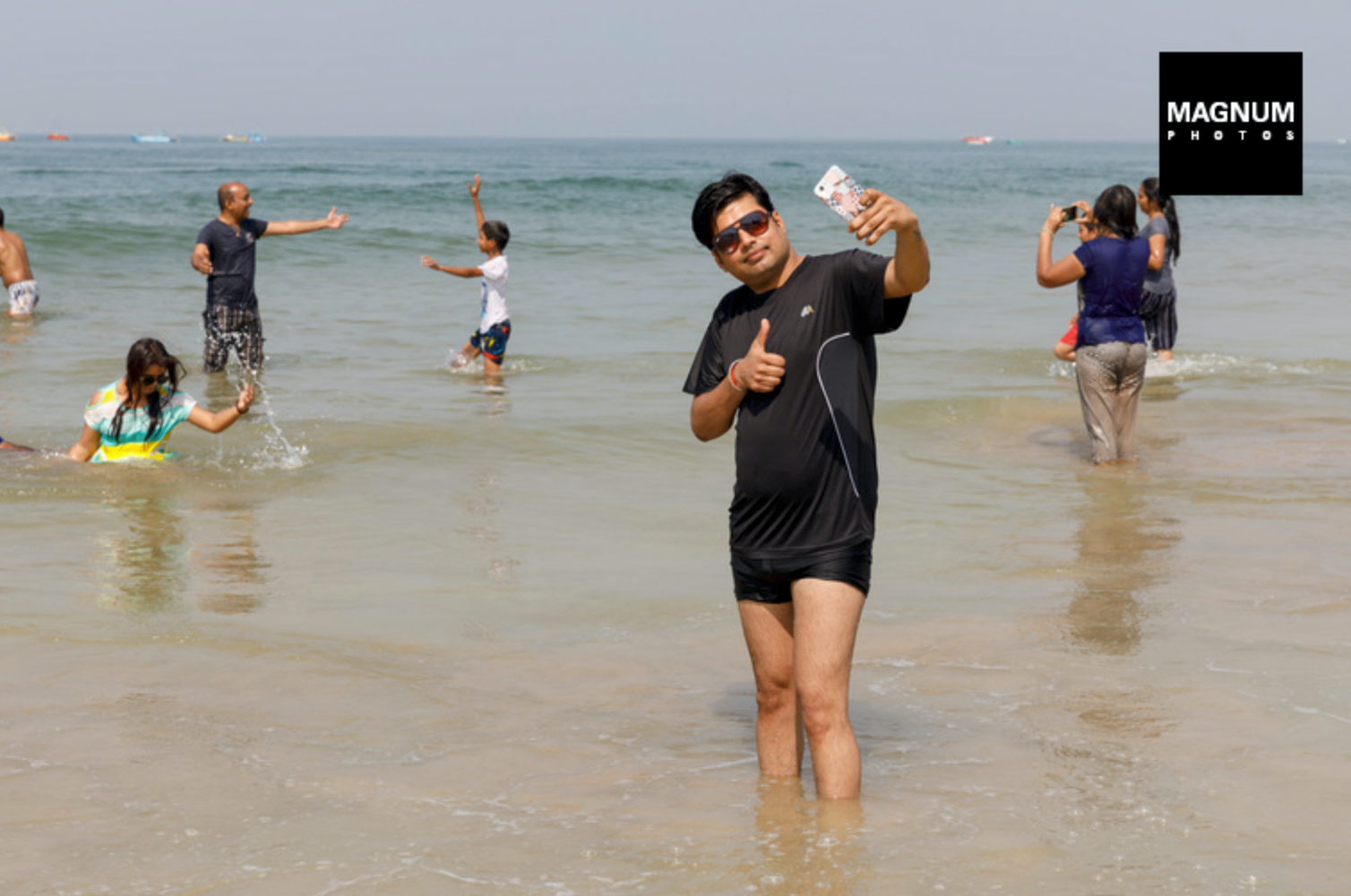
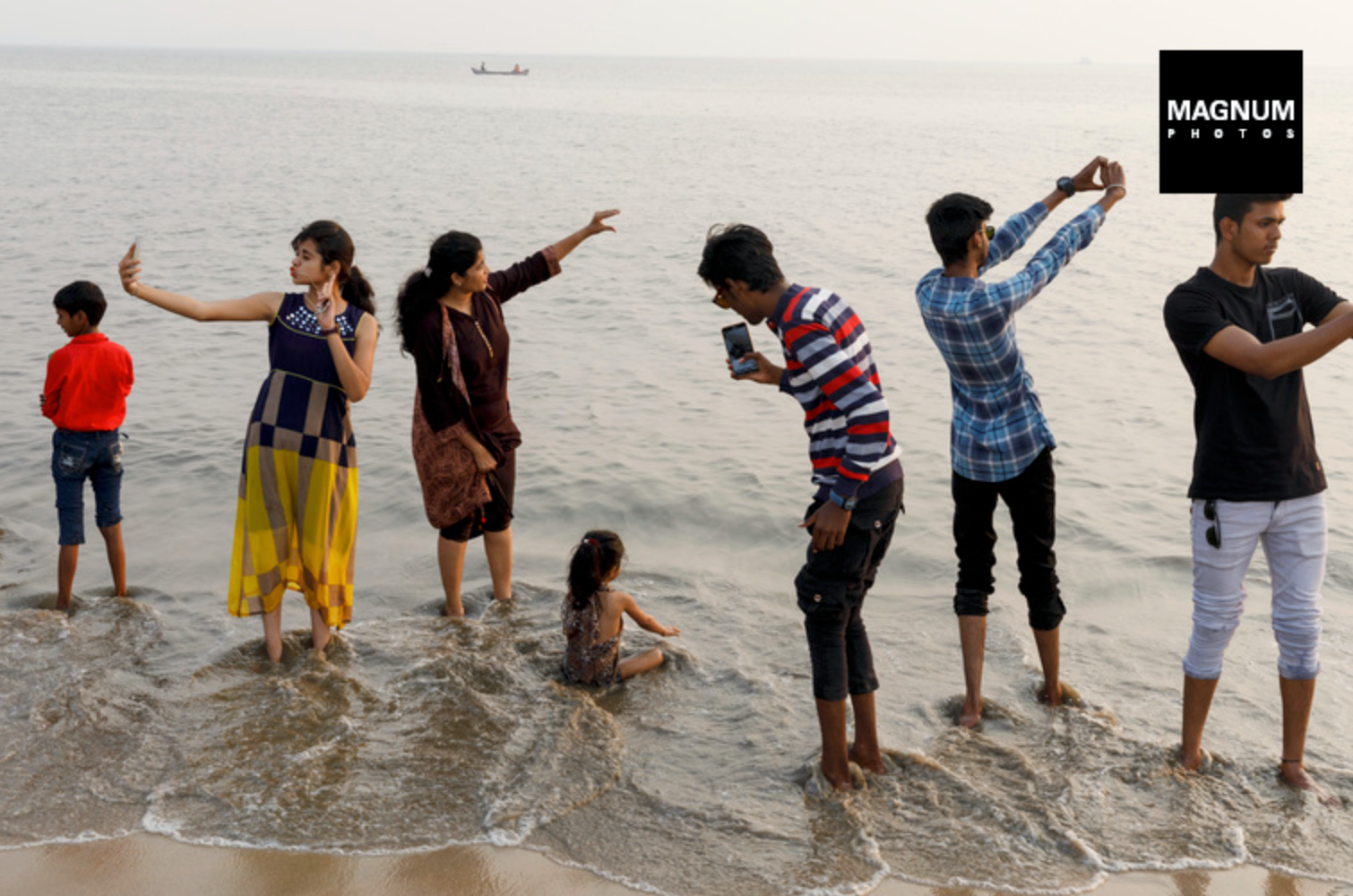
Why is the background so cluttered? Why is the person taking a selfie not centered or placed at a golden-ratio point? Why would Magnum include this project? You may have many questions and may even struggle to believe that Magnum’s president made these pictures.
I like the project because, after seeing it, I feel as though a small seed of humor has been planted in me. The title itself is humorous. First, consider the official introduction:
Here is an unproven statistic: India is the world leader for selfie taking. The only potential competitor would be China, with a similarly large population, but if you refer to the “Death by Selfie” statistics, India is so far ahead that there is no real competition. It is probably wise to assume that if more people are killed by a phenomenon, then more of this activity must be taking place.
The phrase Death by Selfie is literal. Selfie culture is enormously popular in India, and a number of people have indeed died in related accidents. This social phenomenon gives the project’s subject its foundation.
In 2015, 27 people died taking selfies. In both 2016 and 2017, 68 were killed by selfies. Many deaths occurred when others tried to rescue selfie takers swept away by freak waves. People also died by getting too close to raging fires or by stepping backward over cliff edges. To India’s credit, however, the figure fell substantially in 2018, to just two deaths.
Some tourist sites even installed signs prohibiting selfies.
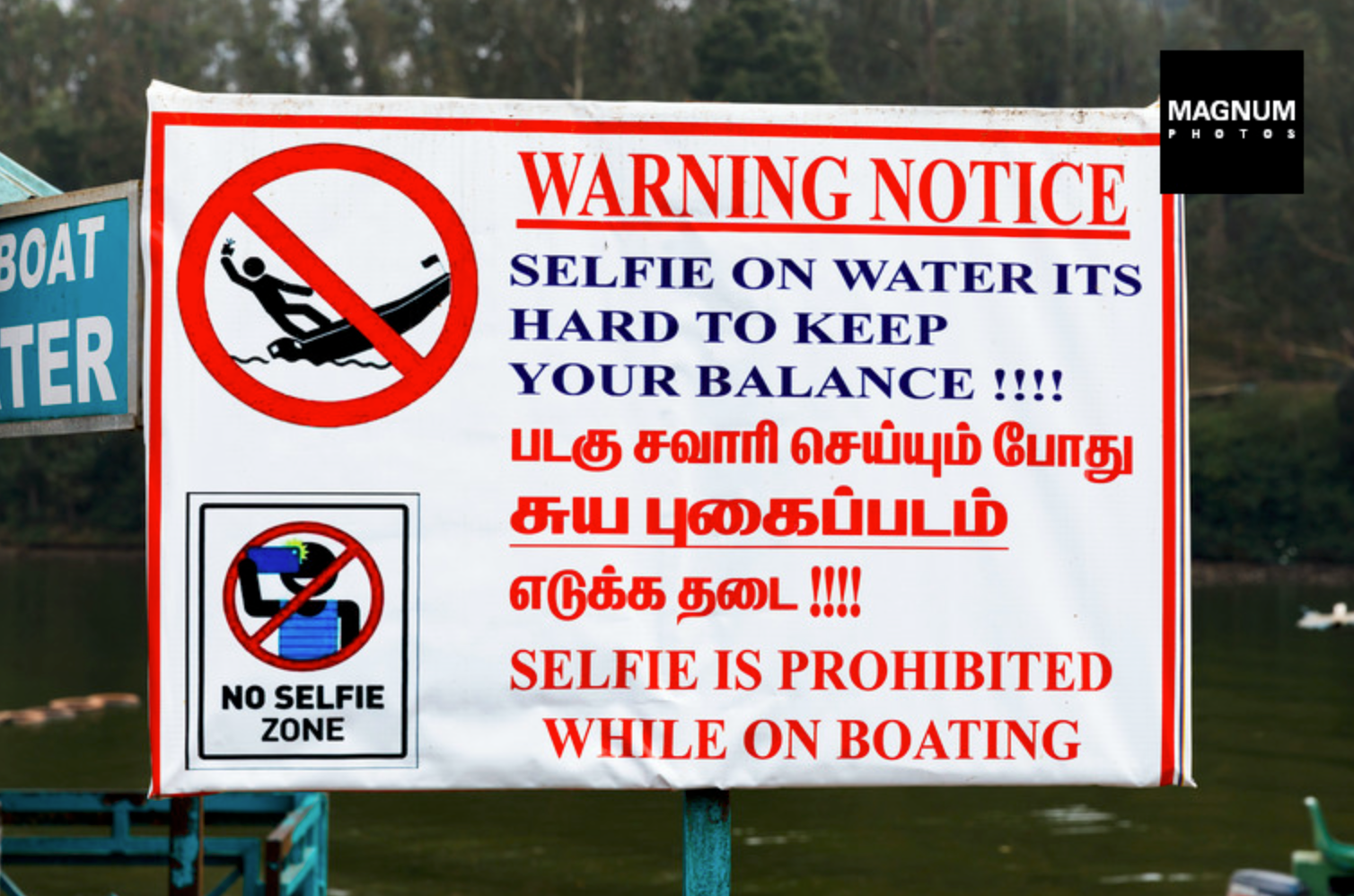
Death by Selfie is therefore connected to real events rather than invented from nothing. Nor is the project limited to India; it observes selfie culture around the world. To me, the word “Death” also intensifies the title rhetorically.
03 - Visual Splendor or Fidelity to the Theme?
Once we understand the background, we can examine how the project itself works. What allows a photographic project to hold together? I believe it requires at least three things:
- A real and clearly defined proposition—the subject being photographed
- A group of photographs that respond to that subject
- An edit, including viewing order and rhythm
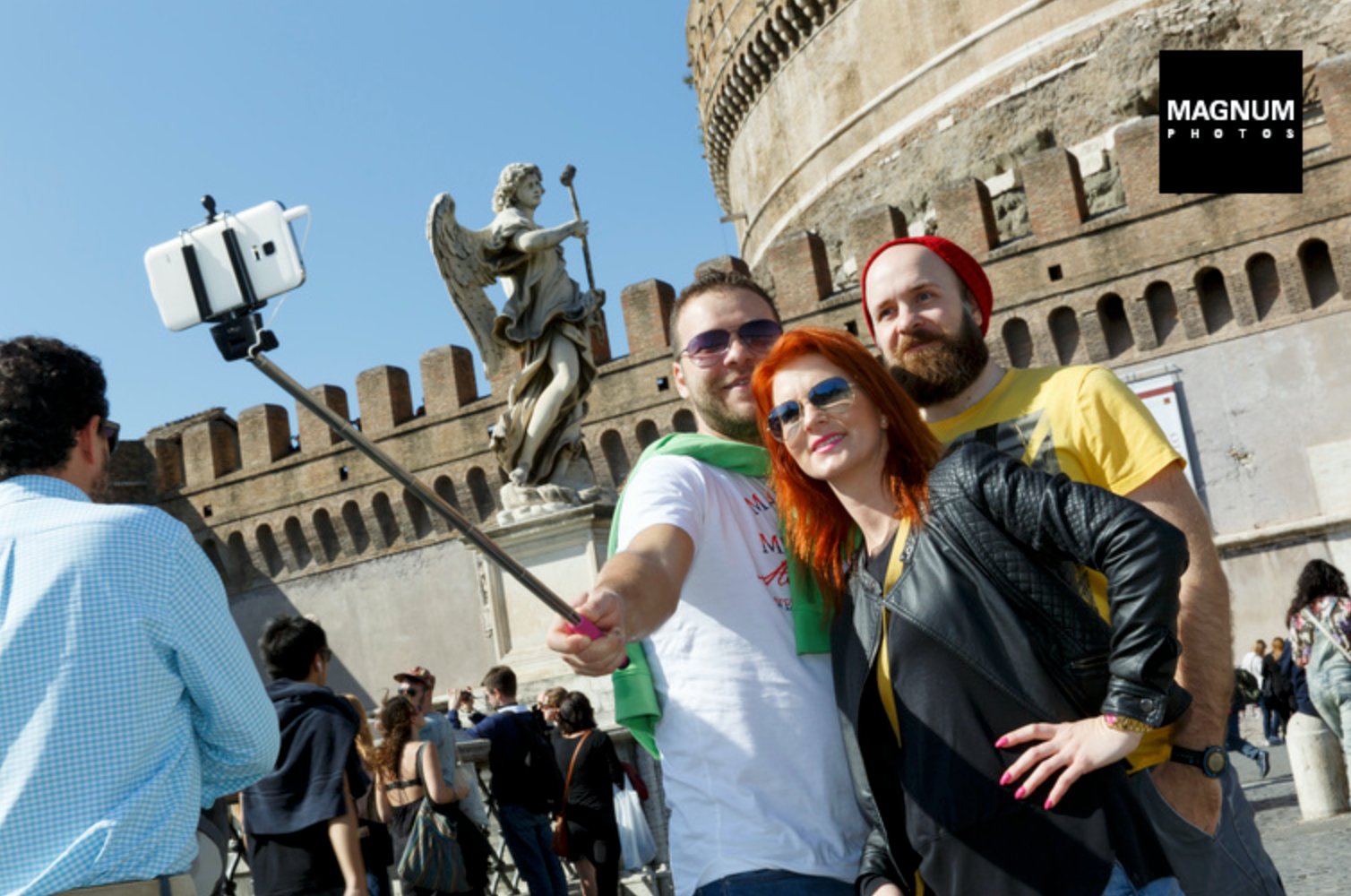
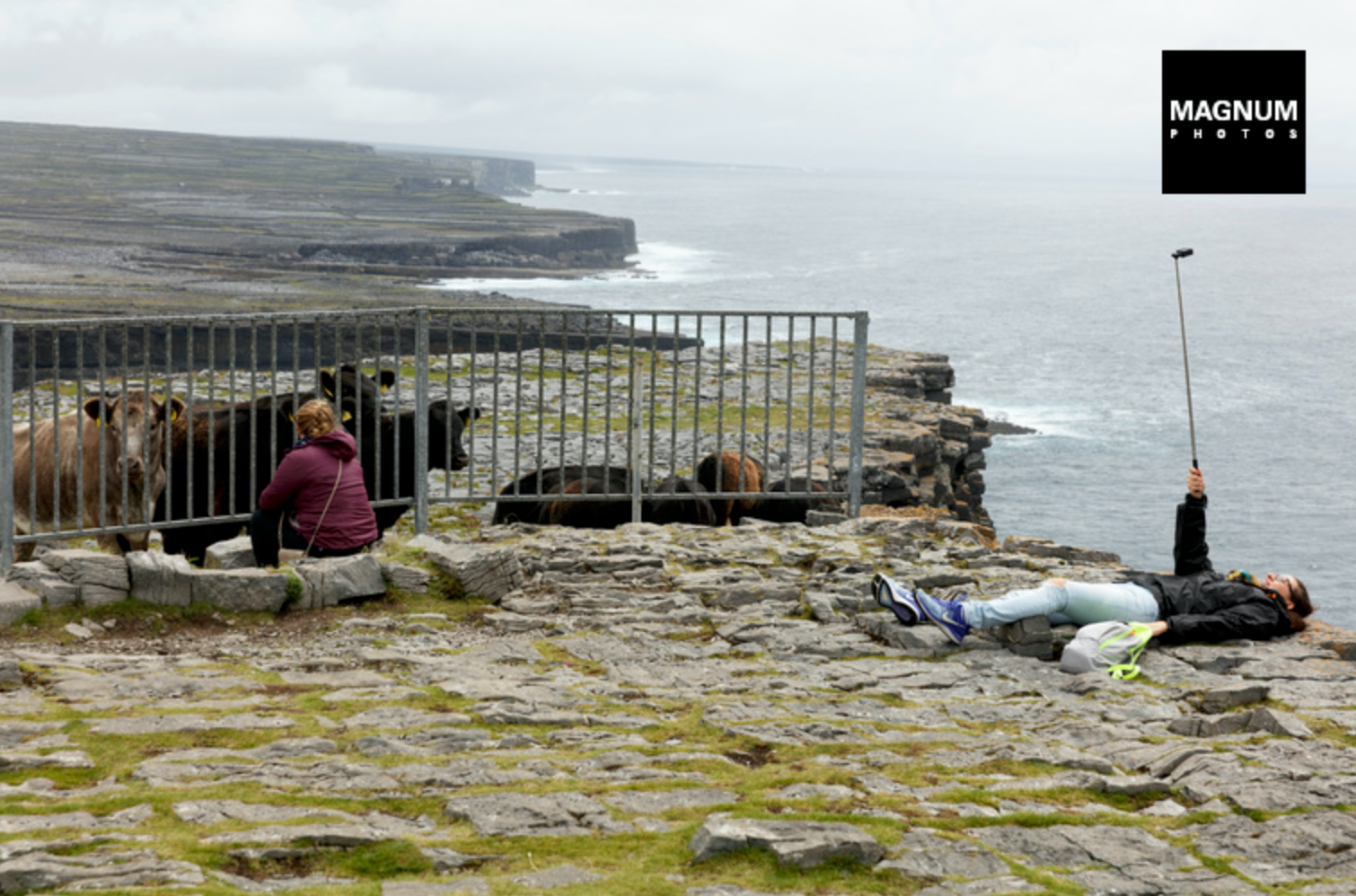

Parr’s judgment of a good photograph differs from that of many viewers. As I understand it, his pictures do not foreground elaborate structure, strict composition, or richly layered color.
This does not mean he ignores those things. Many images in projects such as The Beach have excellent structure. Every accomplished photographer maintains some relationship between structure and color.
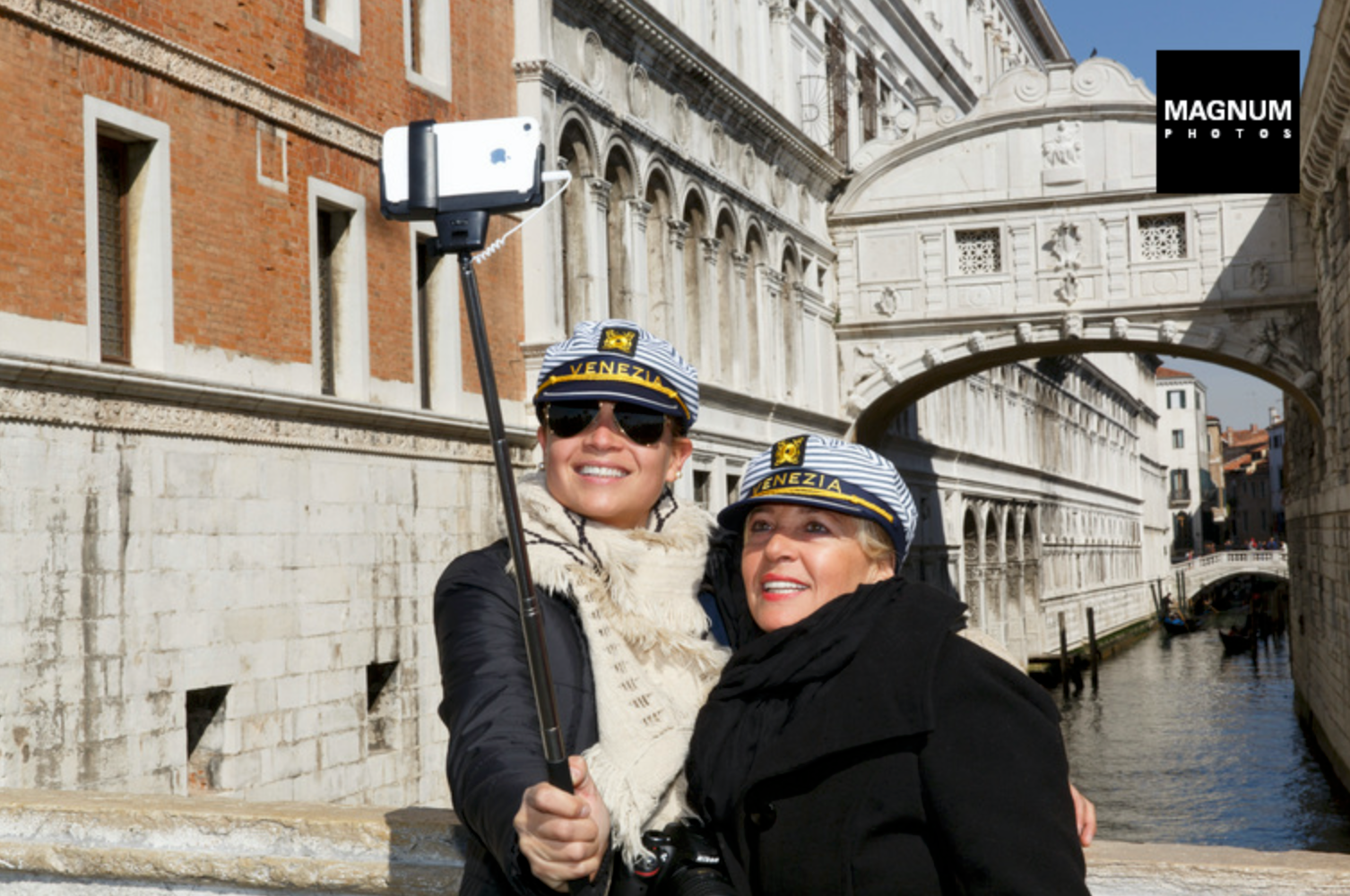
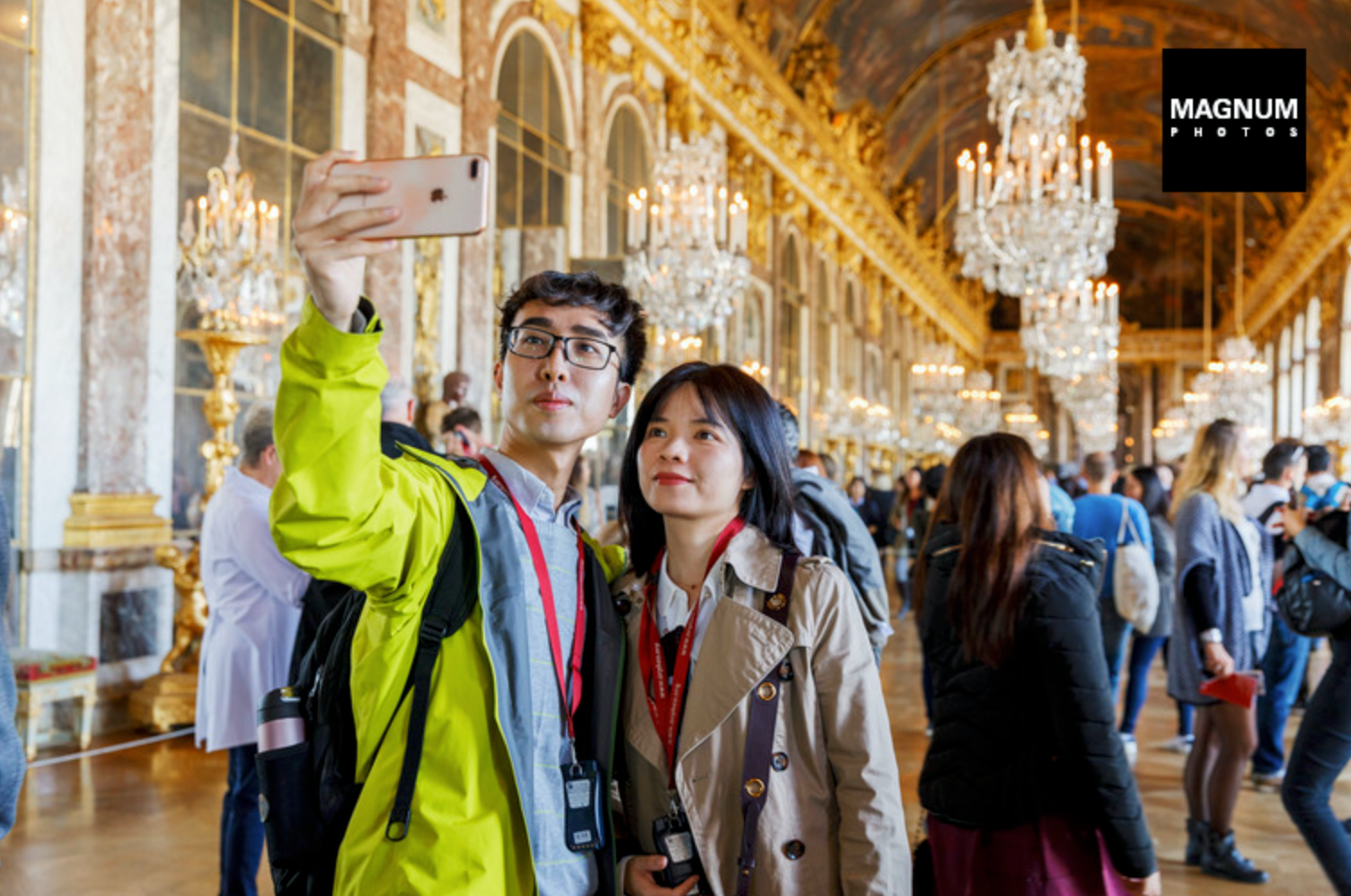
My point is simply that Parr is not known for the forceful structural and chromatic order associated with Alex Webb or Harry Gruyaert. Strange elements that disrupt conventional composition frequently appear in his frames. In the pictures above, the bottle of water beside the cactus may disturb viewers devoted to traditional composition, as may the unblurred crowd behind the people taking selfies.
Yet when the project is viewed from beginning to end, every picture becomes engaging. The images are humorous and light, their colors bright, and their scenes make us smile. Many would not qualify as conventionally “good photographs,” but they respond to the project’s theme with great precision.
When editing, therefore, be wary of an excellent individual photograph that has no relationship to the project.
04 - A Perfect Ending
Finally, I want to share an especially humorous image from the project. It “may have been taken with an iPhone”—and I emphasize that deliberately.
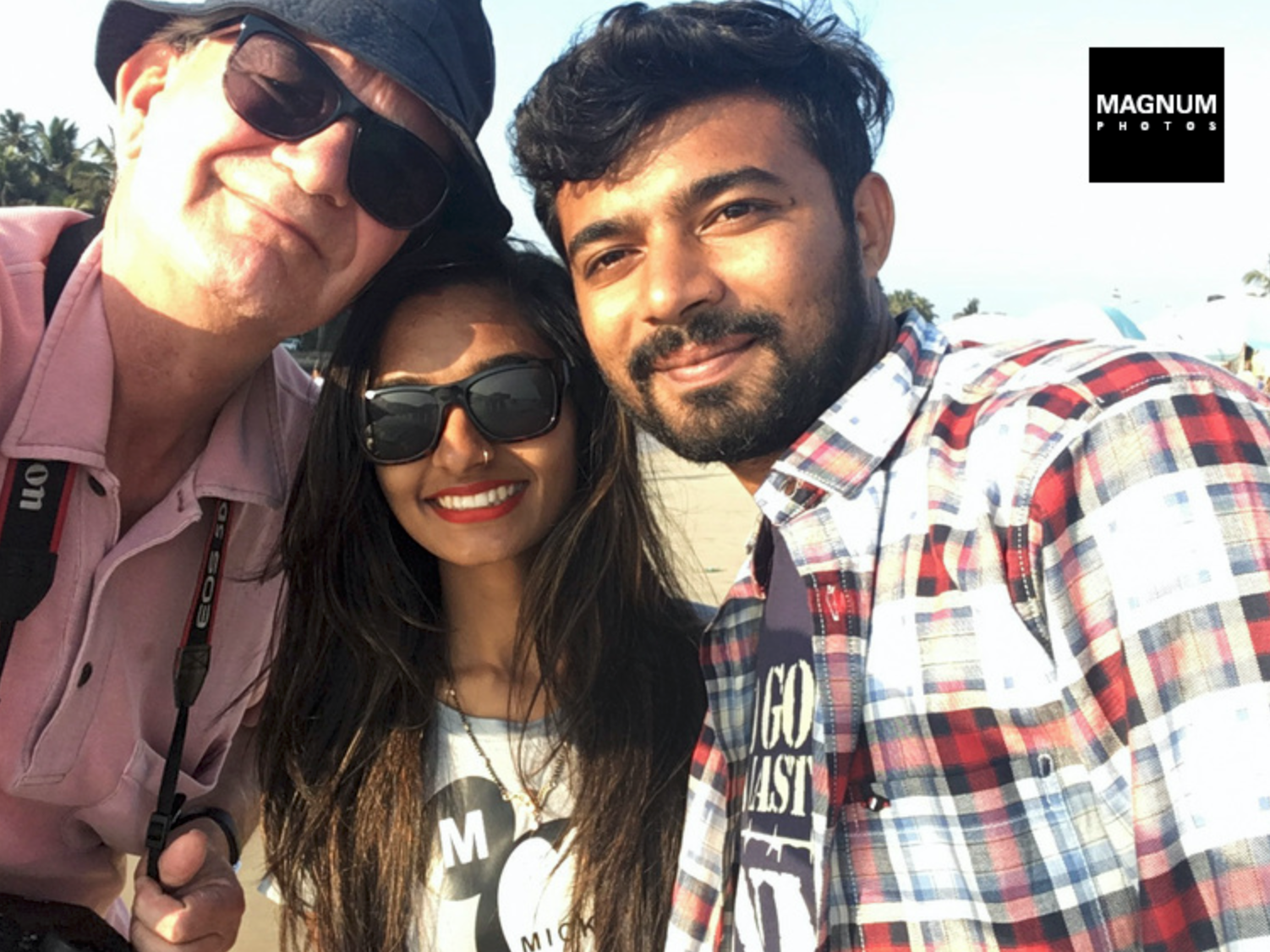
The shadows may be blocked and the highlights are clearly blown. Many viewers would not consider a photograph that looks as though it came from a phone to be good, yet this is my favorite image in the entire project.
It is also the final photograph. Read carefully in the intended sequence, it reveals Parr’s humor at its fullest.
If the picture appeared first, if the sequence were shuffled and skimmed, if the viewer knew little of Parr’s work, or if they were overly attached to technical rules, the humor of this “rubbish” photograph might be impossible to understand.
Return to the title Death by Selfie. The project concerns selfie culture. We have seen selfies in many countries and situations, and then the final frame breaks the boundary between photographer and subject: Parr himself appears in a selfie with people in India. I genuinely laughed. The aging prankster had entered the very culture he had been observing.
He does not painfully condemn selfies because they can kill, nor does he loudly defend them as an expression of human freedom. He simply presents the phenomena to the viewer.
We smile while looking at other people taking selfies. When the photographer himself finally joins in—perhaps pulled into the picture by someone else—the joke is suddenly complete. At least, it makes me want to slap my knee.
This image allows us to experience Parr’s humor fully and completes the project’s pleasure. Some photobooks leave me calm or even indifferent. With Parr, I become absorbed in his expression, not merely the splendor of the image.
I am not arguing that visual splendor is bad. Within a project, however, a photograph that does not draw attention away from the whole and genuinely serves the theme can matter more than a spectacular display of technique. For the reader, experiencing the complete work in its intended order is equally important.
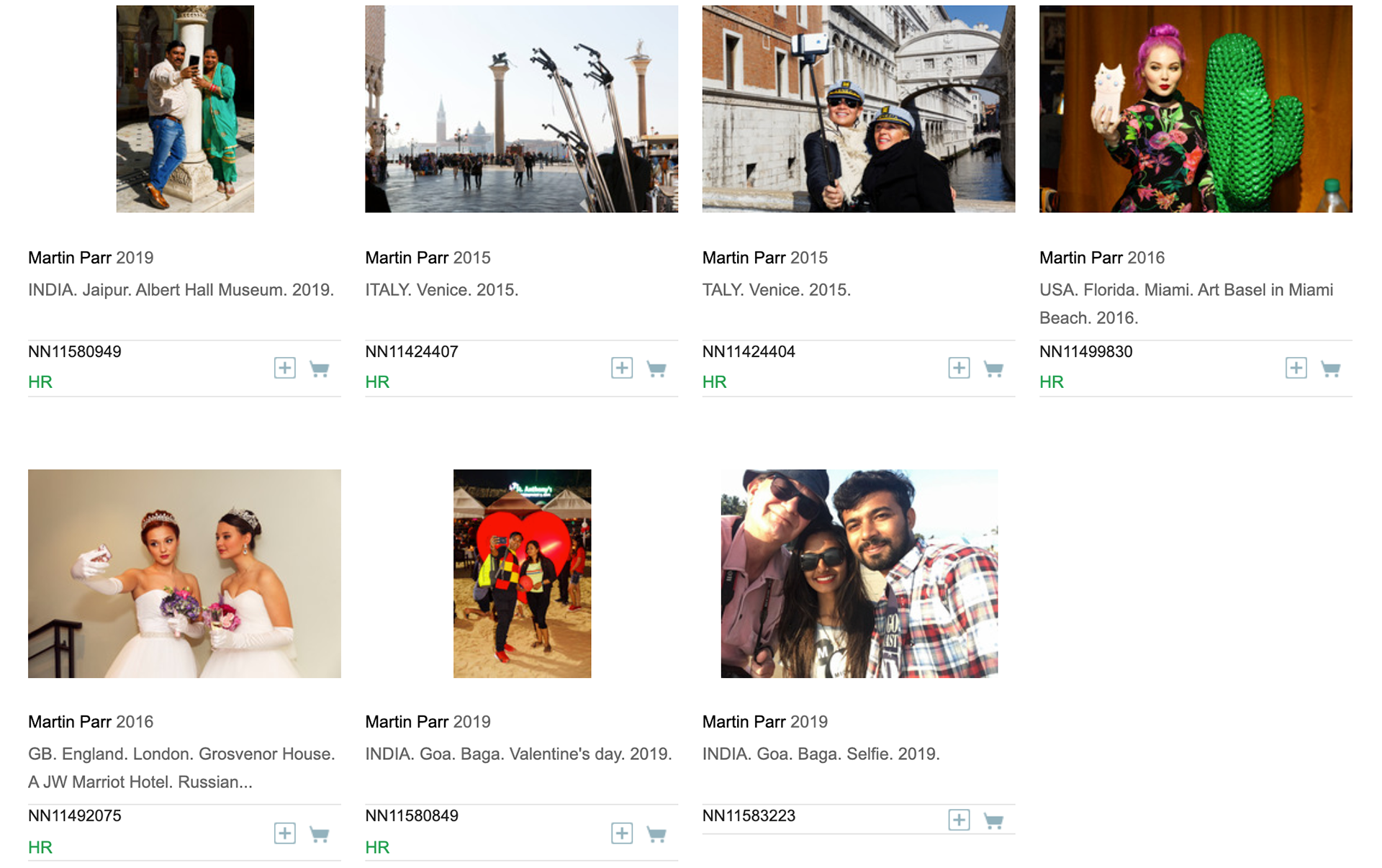
Reading from beginning to end is part of the project.
05 - Why I Cannot Make This Work
So, “Could I take that?”
Many of us have photographed other people taking selfies. What separates those images from Parr’s project? While writing this essay, I revisited some of my own similar pictures and reached four conclusions:
- No system: I had no project in mind, photographed whatever I encountered, then forgot or discarded the pictures
- No inner foundation: I viewed other people’s selfies as curiosities without considering the cultural phenomenon behind them
- Uninteresting photographs: Curiosity of this kind creates a superior, downward gaze; that distance makes the images cold and dull
- No sequencing: Without a project, there is naturally no order or rhythm
If we analyze Parr only through structure and color, the exercise feels empty because those are not the center of his work.
I have also discussed photographers whose command of structure and color is extremely strong, and their pictures can be gripping and beautiful. Does this mean I am now contradicting myself and arguing that we should make amusing projects instead of visually splendid individual photographs?
What I keep emphasizing is: “Be wary of the good individual photograph,” not “Do not make good individual photographs.” Friends often show me pictures that resemble Alex Webb. I may think they are excellent—but then what? Nothing follows.
I passed through the same stage. With enough effort, I could make similar and sometimes technically more polished images. What followed was only emptiness, because the work was neither me nor my expression. It was imitation.
When analyzing photographers, I am not saying everyone must collect “rubbish” like Parr or photograph color like Harry Gruyaert. I began asking, “What do I want to photograph?” and “What do I want to express?” precisely because I experienced the emptiness of imitation.
I still have no definite answer and can only keep photographing. If asked for advice, I would say: make more projects, remain cautious of good photographs that offer immediate self-satisfaction, and engage more deeply with society itself. Then perhaps one day—my God—we may find a style of our own.
Of course, under Parr’s influence, I have also started laminating my photographs.
06 - So
What camera do you use?