
The “Language” of Photography
After I began photographing, I often found myself caught in a cycle. I would find something “good” to photograph, lose interest after working with it for a while, and realize that I had reached a plateau. Then I would see someone else making genuinely good work and begin imitating their techniques and subjects. Through imitation, I would discover a new point of interest, only to repeat the same process again.
For several reasons, I no longer feel as much enthusiasm for the act of “taking pictures” itself. Over a period of a little more than a year, I took roughly thirty to forty thousand photographs. Looking at how little I have photographed in recent months, it seems that taking pictures no longer matters to me as much as it once did.
Some people will naturally say, “You have reached another plateau.” I believe, however, that this is less a plateau than a “critical moment.”
01 — Bruce Gilden
People who know me are aware that I like Bruce Gilden very much, though I rarely say so. Gilden is so popular that liking him has itself become thoroughly mainstream.
If you attend a gathering of street photographers and show flash-lit street photographs, a large proportion of the photographers will probably mention Bruce Gilden. For someone described as an “artsy young person,” becoming too similar to everyone else can feel slightly “shameful” (laughs).
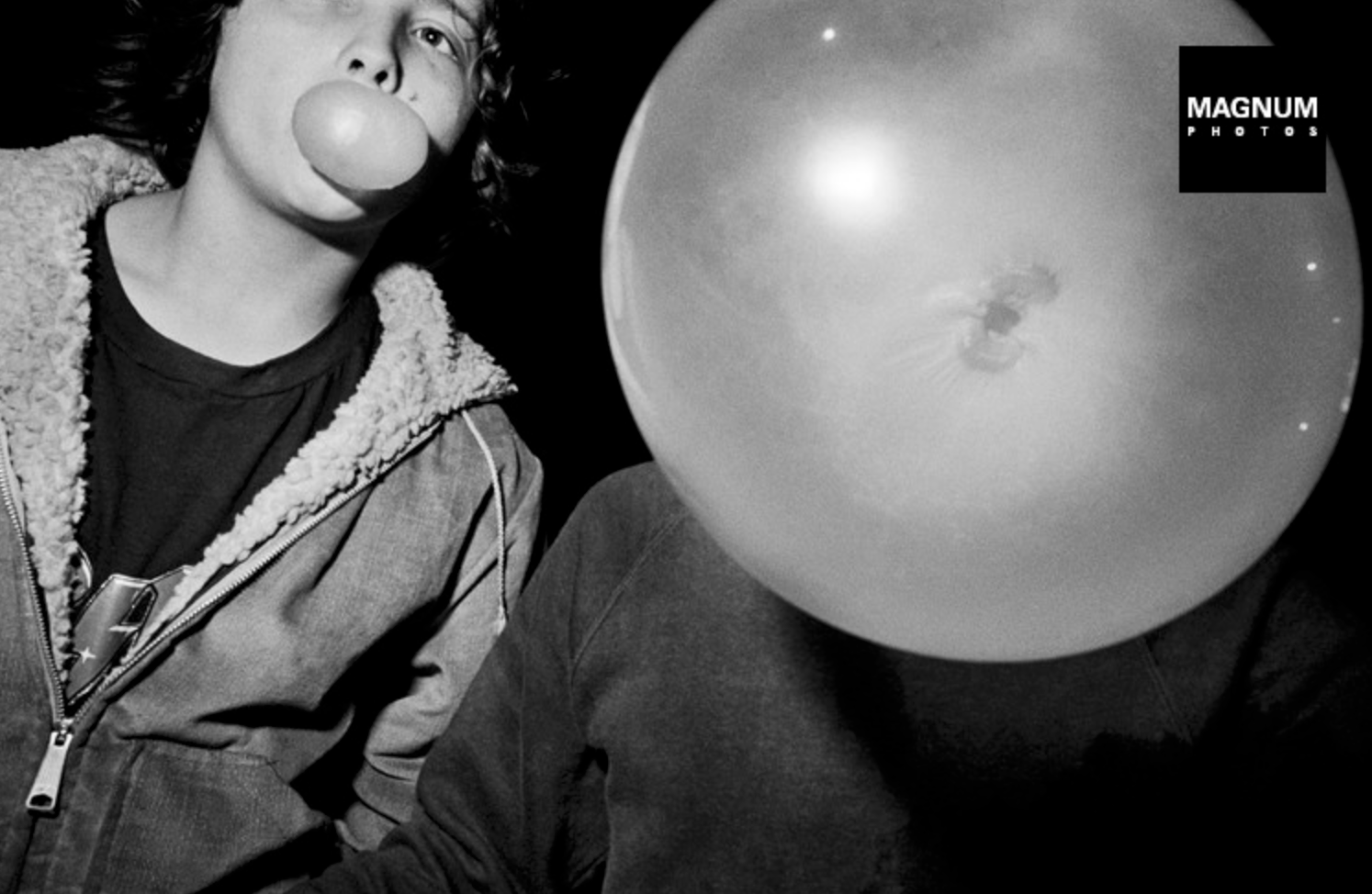
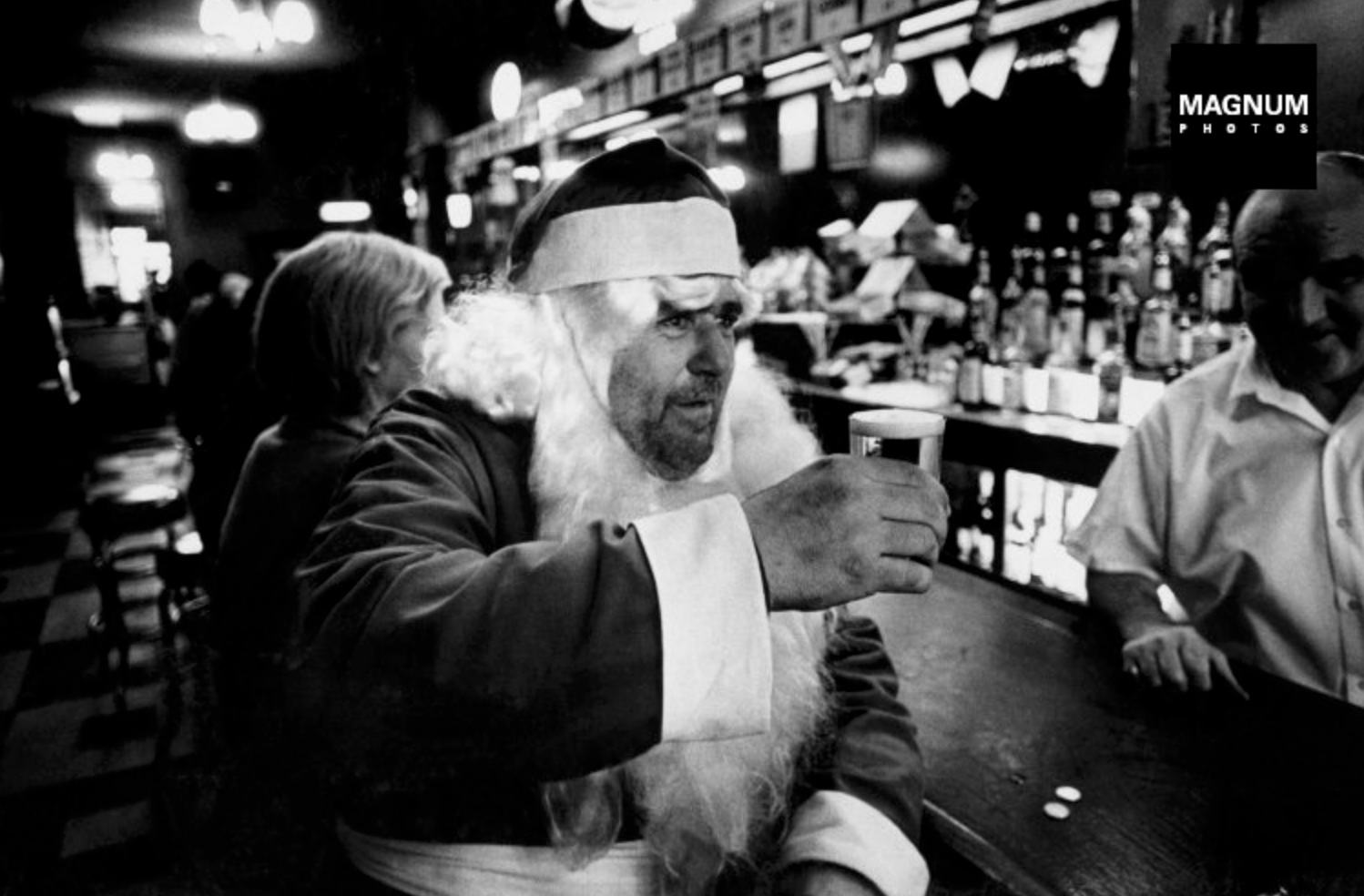
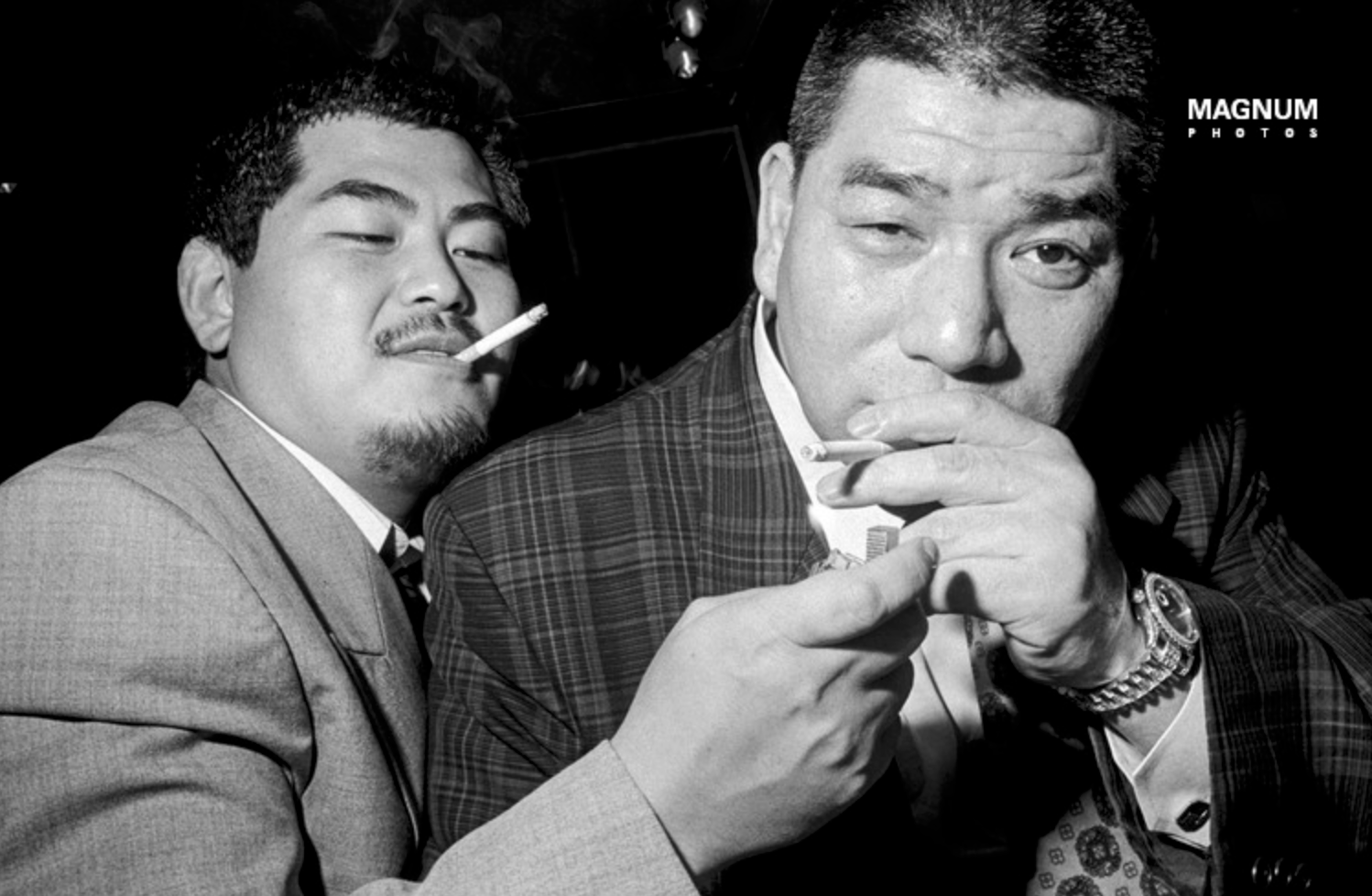
Bruce Gilden showed many people that “street photography can also be done this way.” For a time, I also enjoyed using flash at very close range to photograph people’s faces. Recently, however, I have become less interested in “putting a flash directly in someone’s face.” I still use flash and photograph faces at close range, but I no longer regard this as photographing in Bruce Gilden’s manner.
This may be difficult to understand, so I will explain. After photographing for some time, I grew tired of using flash directly on people’s faces. On the street, I therefore tried to avoid working in Gilden’s manner. Yet I still use flash and still photograph faces. The resulting pictures may not look very different from the ones I made before, but I feel that their internal basis has changed. For this reason, I no longer consider myself to be using “Bruce Gilden’s method of photographing.”
The greatest difference lies in the “starting point,” or the “core.” Many Magnum photographers use flash. Martin Parr has also used flash consistently in his street photography, but it would be difficult to say that Parr and Gilden share the same photographic style. The most fundamental part of their work is different, and so the photographs they produce are different as well.
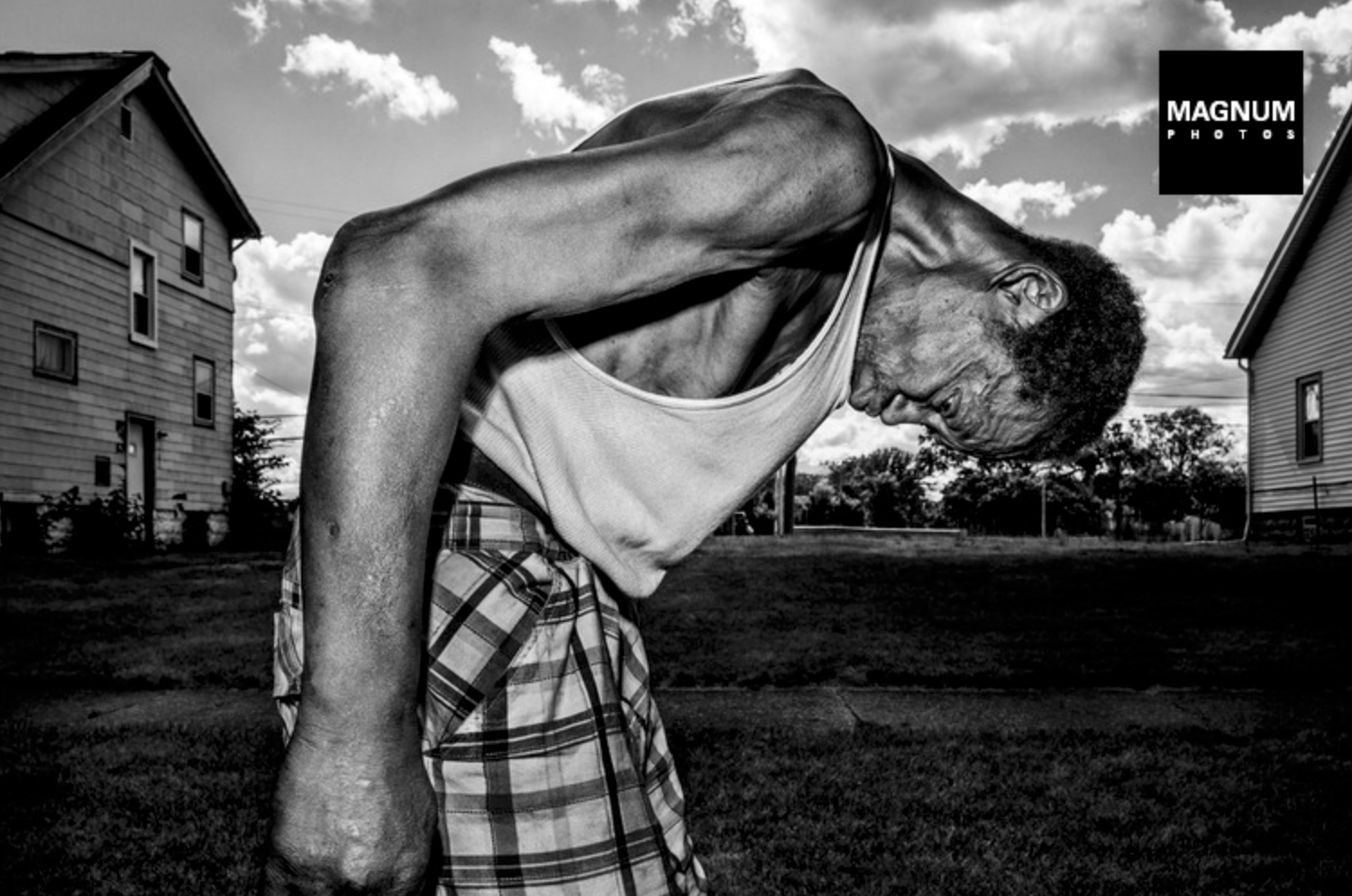

Even when both use flash, we can still see “the difference in their cores.”
When I previously used flash on the street, my thoughts were: “Bruce Gilden’s method is remarkable,” “I want to make photographs like Bruce Gilden’s,” and “It would be wonderful to take pictures like these.” With these thoughts, as I became bolder and less concerned with embarrassment, I managed to make some photographs with a distinctly Bruce Gilden style.
Then, while watching an interview with Gilden, I heard him explain why he photographs this way. His father did not recognize or approve of him when he was young, and he had difficulty interacting with people. He therefore forced himself to photograph in this manner, subconsciously expressing, “I can do it.” When asked, “Many people are imitating your photographs. What do you think about that?”, Gilden replied, “They do not understand photography at all.”
“They do not understand photography at all.” This sentence made me deeply ashamed. Looking at my earlier photographs, I saw that they contained only technique. There was no self and no expression, only a copy of a particular operating method. In this respect, it was true that “I did not understand photography at all.”
02 — Nobuyoshi Araki
Recently, I have spent less time picking up the camera. I feel that I no longer need to train my “photographic technique” as much as I need to train my “technique of thinking.” I therefore returned to books I had never opened or never finished, including Nobuyoshi Araki’s Photography Talks.
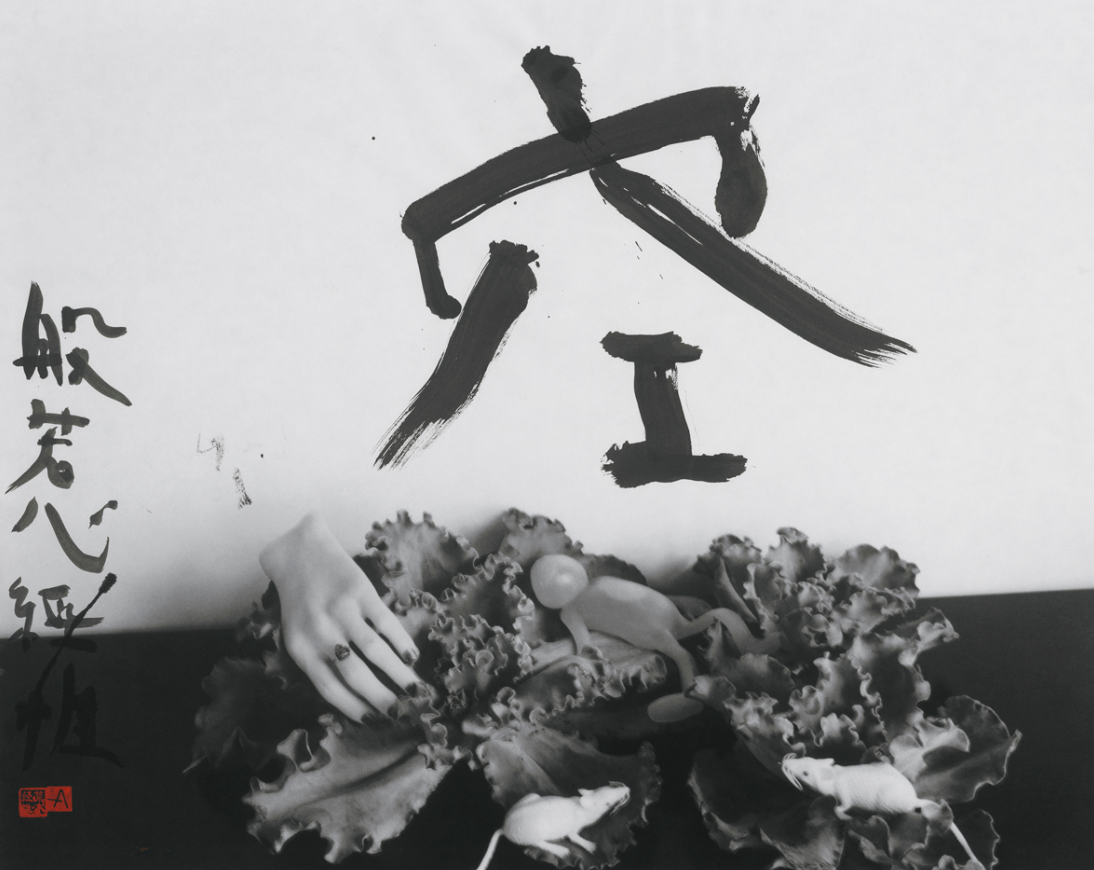
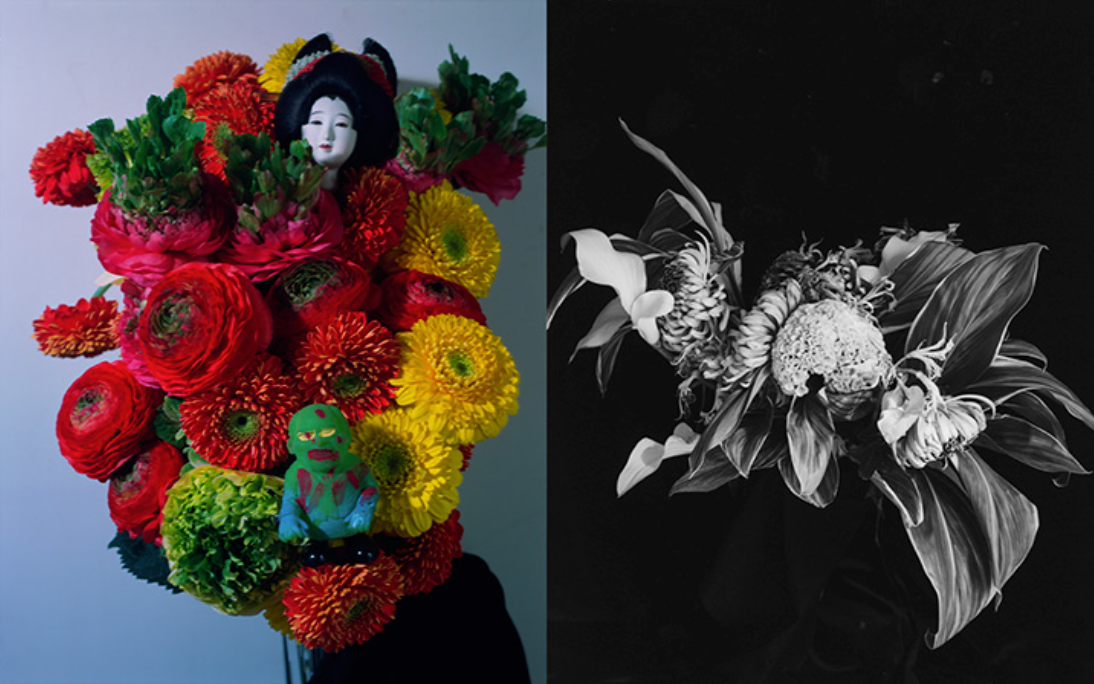

When I first encountered Araki, I thought he might be a photographer who sought attention through provocation. After all, some contemporary artists and photographers genuinely do this. Looking back now, however, I was quite arrogant at the time. I am considerably more modest today (laughs).
After photographing seriously, I realized that everyone likes and wants to express different things. The hardest questions remain: “What do I like?” and “What do I want to express?” These are the foundations of all “artistic creation.” Without them, it is easy to produce work like my photographs in the “Bruce Gilden style”: they seemed good at the time, but one or two years later, they had no soul at all.
I was moved while reading Photography Talks. What touched me was the realization that Araki did not seem quite as much of a “bastard” as he appeared. Although the things he loves are closely connected with sex, his starting point is consistently moving. I read his thoughts on life and death. His attitude toward the deaths of his father, mother, and wife could appear “cynical,” as if he were saying, “The dead cannot return.” Yet in his photography, particularly Sentimental Journey, one can see the “pain” and “sorrow” inside him. I therefore began to interpret his photographs again.
“Sincerity.”
Many people may ask whether “work like this,” or “work made to attract attention,” can be called “sincere.” I believe it can. We tend to see Araki as a kind of “unruly demon” and overlook his most sensitive side. His speech may sound indifferent and cynical, but his work shows him “opening his heart” and “holding nothing back.”
Even his writing carries a playful kind of sincerity.
03 — The “Language” of Photography
I have discussed Bruce Gilden and Nobuyoshi Araki, and also mentioned Martin Parr. All three have photographed by “pointing a flash toward the subject,” yet their pictures are immediately distinguishable. This is the “language of photography” that I want to discuss.
By now, you should understand why I say, “Although I still use flash to photograph faces, I am no longer photographing in Bruce Gilden’s manner.” After learning the technique, I began to think about how to express myself. This is why I do not regard the present as a plateau, but as a “turning point.” The prerequisite for learning to “express myself” is “understanding myself.”
But “understanding myself” is extremely difficult. It requires reading many books, watching films, listening to music, and doing things entirely unrelated to photography. As the “self” becomes richer, “expressing the self” becomes easier. I believe this is the “language” that must be sought through photography. You may say that, after all this discussion, language is simply style. Calling it style would not be fundamentally mistaken, but I believe “language” contains “style” while also going beyond it.
At different times, my work has been described as being in the style of “Bruce Gilden,” “Daidō Moriyama,” “Martin Parr,” or “Vivian Maier.” I do not necessarily agree, but many friends say these things when looking at my photographs. This makes me wonder whether I have no style of my own, or whether every style has already been explored by earlier photographers.
If you think this way as I do, you will discover that it is a dead end. It is impossible to produce a completely new photographic or artistic style out of nothing. But if we give up the pursuit of novelty for its own sake, another path appears: language. Finding a “language” is also difficult. It may require a long time, perhaps an entire life. At least, however, it is an exploration of life, the world, and the self, rather than merely an exploration of technique and visual arrangement.
Martin Parr has said, “Even now, I do not know what kind of person I am, so I can only keep carrying a camera and photographing.” Yet when we see certain images, we still think, “This must be a photograph by Martin Parr.” Similarly, when we see Araki’s work, we may think, “This is completely the man himself.” He really is like that—like a lens that is permanently erect.
Photographs themselves can easily converge because techniques are easy to copy. What is hardest to copy is the “person.” I can imitate Daidō Moriyama, Nobuyoshi Araki, Alex Webb, or Bruce Gilden, perhaps very closely. But I will never become a second Moriyama, Araki, Webb, or Gilden, because every person has a world of their own.
Some people say that exploring the world and exploring the self are the same thing. What, then, is your “language”?