
Images of China and Its People
What kind of China—and what kinds of ordinary people—were preserved in photographs made a century ago? Looking at these late Qing images is not only a way of viewing a distant period, but also of reconsidering ourselves today. The surrounding world has changed greatly, yet people’s lives, desires, prejudices, and hopes may not be as unfamiliar as we imagine.
01 — Form and Content
While photographing, I often encounter the question: what does a Chinese photographic language look like? These doubts can make it difficult to continue working. In my spare time, I therefore began reading books about photography in China. To be honest, in such a large country, it is surprisingly difficult to find photographic materials and books that genuinely discuss this subject. I recently read a book about historical images of China, Images of China and Its People, and formed some thoughts of my own.
When I began reading, my first reaction was, “It is all right.” There were photographs accompanied by text and explanation, but nothing especially difficult or technically extraordinary, particularly now that photography has become widespread. Yet I think there are two ways to study photographic history. One is to read how other photographers describe that history; the other is to examine surviving images from the place itself. Put simply, we can study how critics understood photographs at the time, or we can look directly at the works.
When studying Japanese photography, one approach is to read criticism. We might discuss the historical conditions of the Japan photographed by Eikoh Hosoe or Daidō Moriyama and ask why their images carry particular emotions. Another approach is to look directly at images that documented Japan at the time. I believe Images of China and Its People belongs to the latter category.
During the first thirty percent of the book, I felt somewhat indifferent. The scenes and content appeared too simple, consisting largely of portraits and basic landscapes. I am not saying that the technique was flawed. Accurately exposing and preserving so many negatives at the time was extremely difficult, and the photographer’s technical work could be considered impeccable. But from today’s perspective, the content initially seemed too simple, and the photographic technique produced no emotional response in me.
From another perspective, however, in a present filled with discussions of “form” and “content,” structure, and complex composition, I often feel the weakness of content. An image may be visually forceful while what lies behind it feels thin. This is not a criticism, nor am I saying that it is bad. But in Alex Webb’s complex compositions, I feel that form outweighs content, although that is not necessarily a problem. His extreme pursuit of visual structure often astonishes me, but afterward I can also feel empty and powerless.
By the time I had read about half the book, my indifference had turned into surprise. I suddenly felt the force of documentation. Documentary photography has certainly declined today, but the power of this reality still gave me something new to consider.
02 — A New View of People from the Past
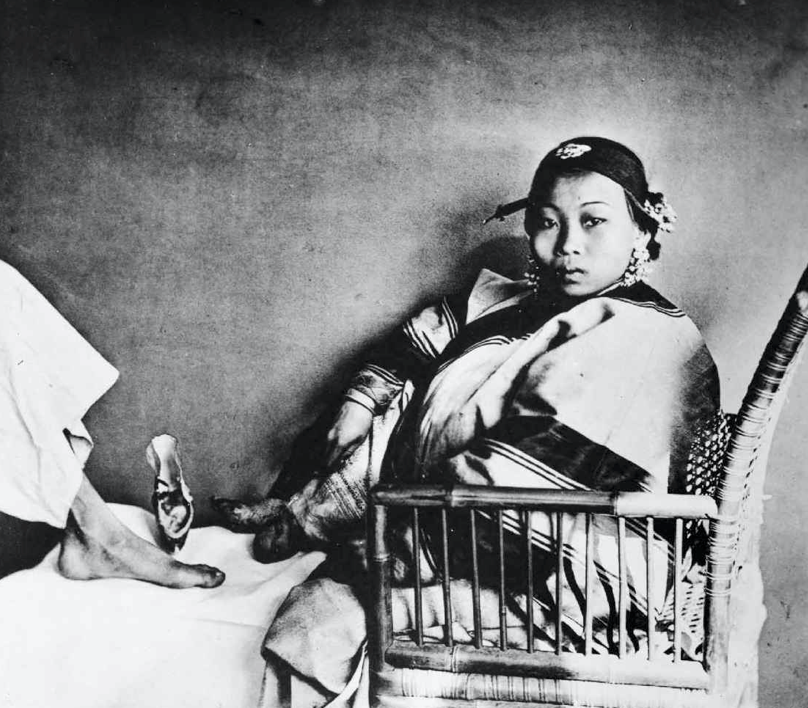
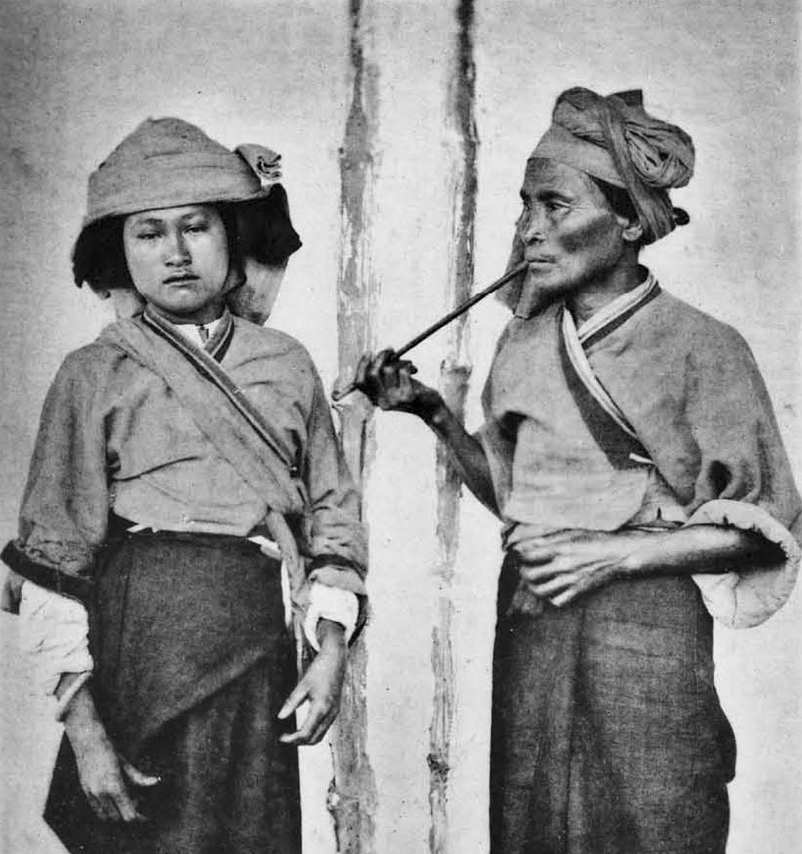
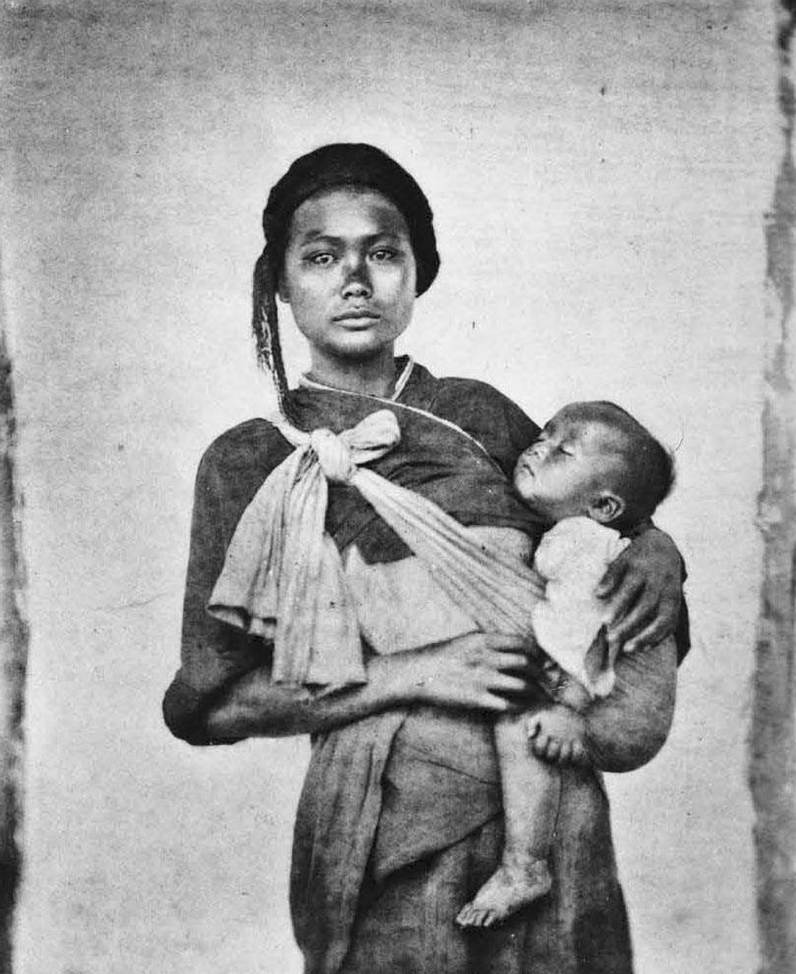
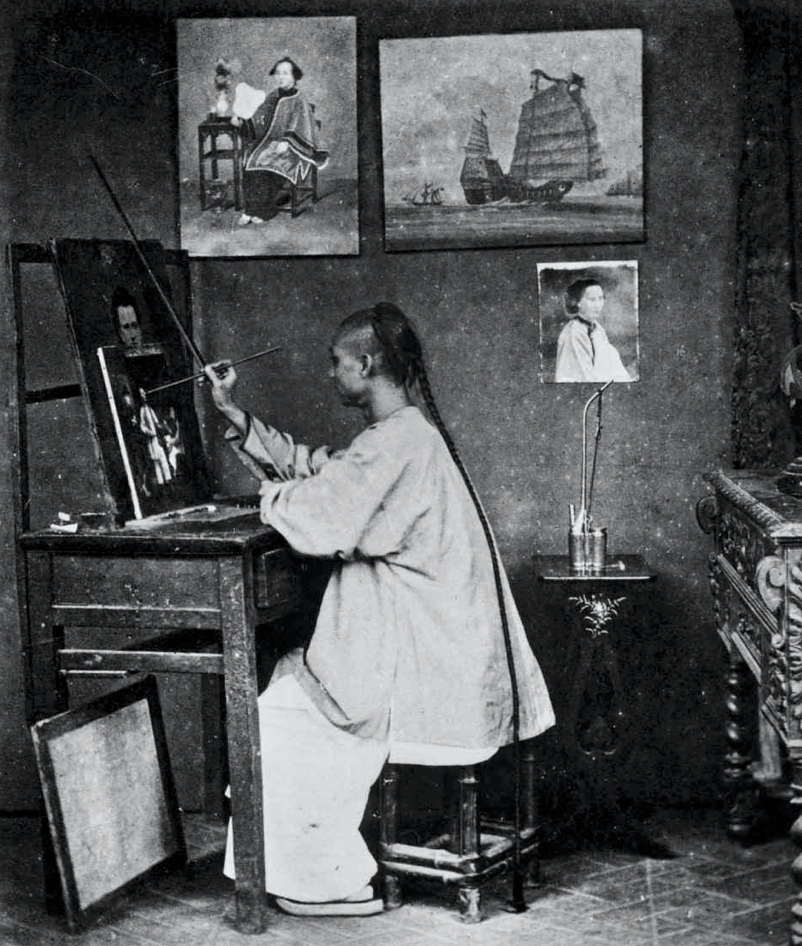
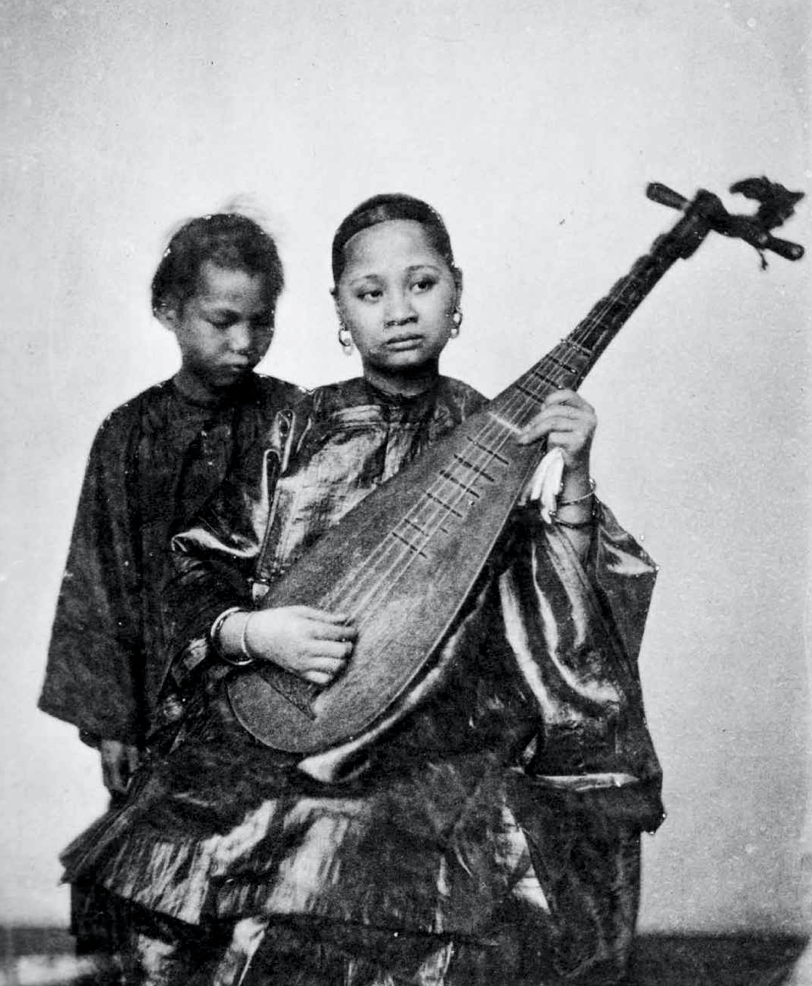
My surprise came from a realization: “Chinese people—or human beings in general—have not changed very much.” Before reading the book, my imagination of China’s “past” still came largely from television, and my view of “people in ancient times” was distorted. Close your eyes and imagine people in Qing China. They may appear poor or wealthy, dark and thin with queues, women with bound feet, or timid people afraid to meet another person’s eyes. The people in the images may indeed look this way, but the photographs also reveal something different.
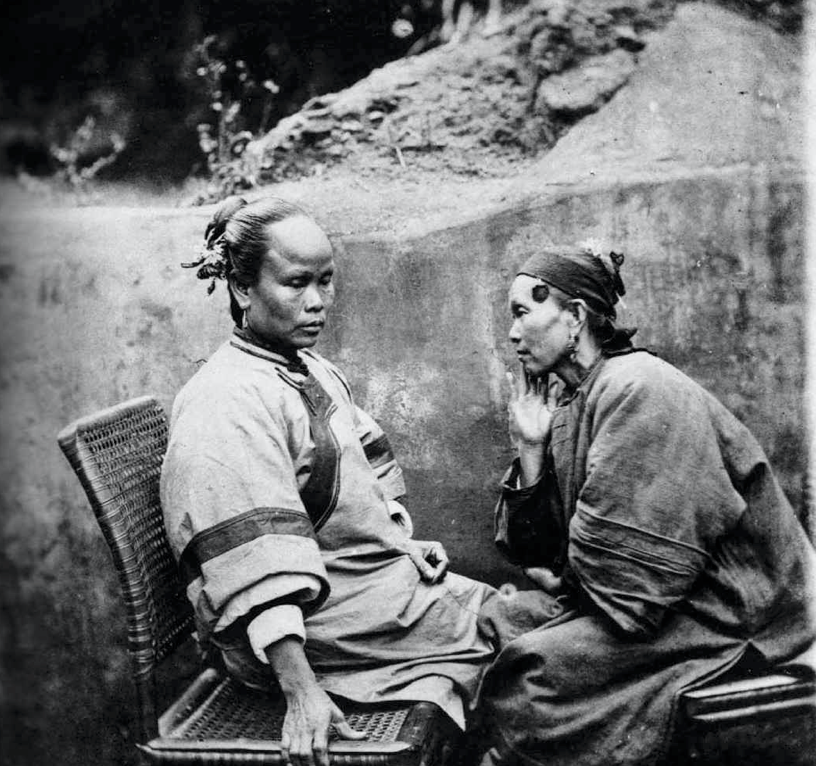
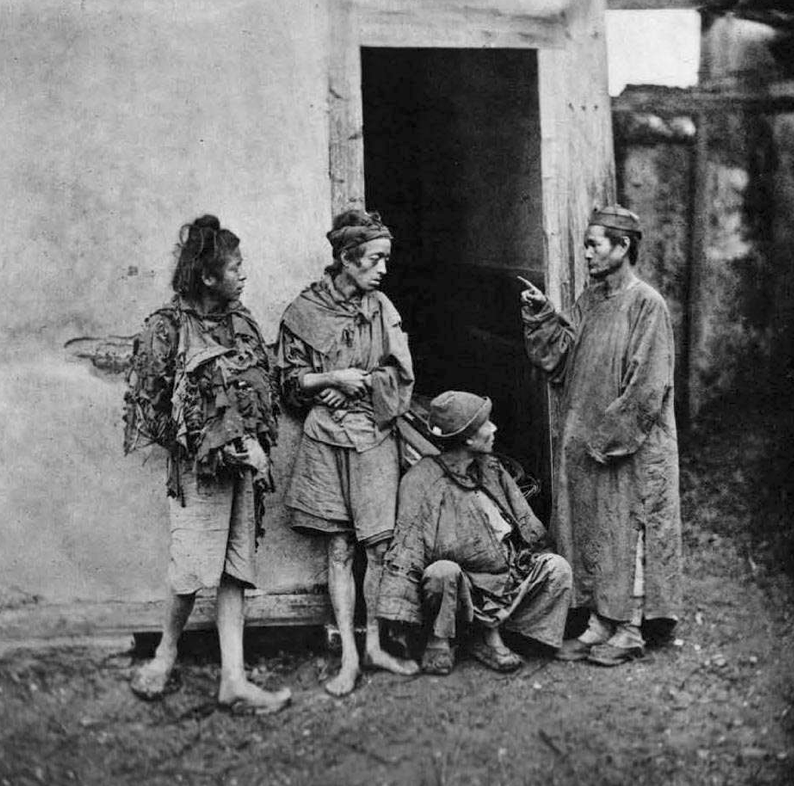
I have seen many old women belonging to different countries and peoples. Fairly speaking, however, I have not found a single exception among them. They all possess an endearing little fault—or perhaps a fondness—for sitting together, gossiping about their neighbors, and commenting at length on local affairs.
I found this amusing. Even today, at the entrances of many residential compounds, various women commonly called “aunties” sit together discussing the lives of their neighbors. This made me realize that many things did not first appear “today.” They already existed in the “past,” even the distant past.
Consider foot-binding. Today, we can call it a harmful custom because it reveals control and oppression of women. Yet if we turn our attention to the present, “lipstick” may share something with it. The two cannot be treated as fully equivalent, because foot-binding directly damaged women’s bodies. But in terms of cultural pressure, an invisible hand has always influenced people, whether created by men or by elites within consumer culture.
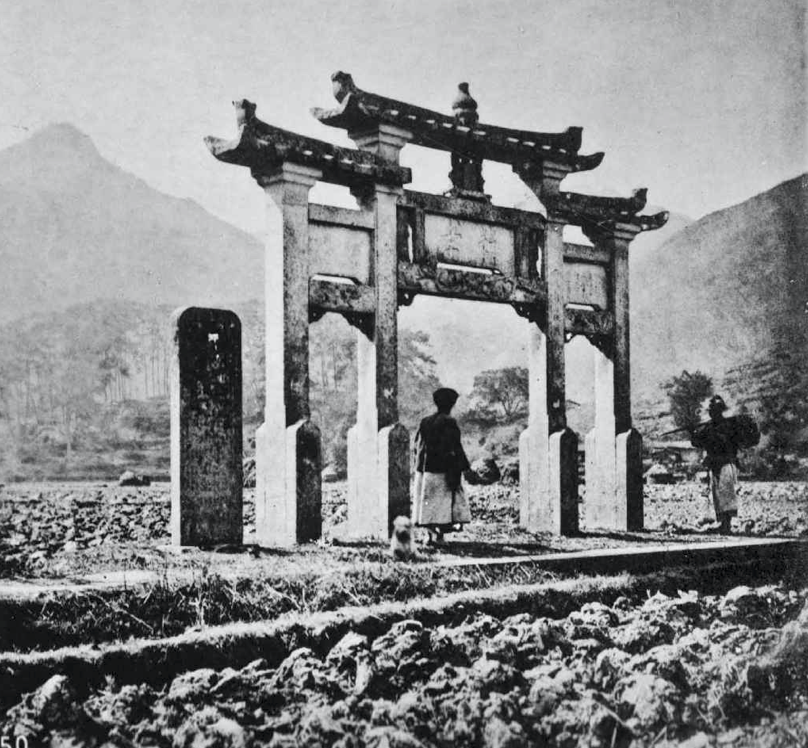
Interestingly, when foreigners criticized foot-binding, people at the time replied that the British practice of putting women in corsets was also physically deforming, leaving the author of the book without an answer. I laughed when I reached this part. Chinese people at the time were not fools, nor were they merely the oppressed “Chinese and dogs” of a familiar phrase—at least not before war broke out. They were like leaves in the river of a great historical period. A century ago, they did not know what the future would bring, just as we do not know how our own future will change. Although the external environment is now very different, our thoughts and behavior may not have changed very much. We believe we are more “civilized,” but are we really?
Contrary to common assumptions, although sons were favored over daughters, wealthy people also established organizations resembling foundling relief societies, helping to take in abandoned infants and improve people’s lives. Today we know that without changing social relations, it is difficult to solve such problems at their roots. Even so, the actions and ways of thinking of people at the time do not appear outdated today. Sometimes our judgments of the behavior of “ancient people” seem more ignorant and absurd than the behavior itself.
03 — Choosing Not to Understand
As I approached the end of the book, I felt a certain sadness. It was directed neither inward nor outward, but came from pessimism about reality. While reading, a voice repeatedly said in my mind, “Foreigners did not actually fail to understand China.” I once believed that the West had its own system of discourse and photographic narrative and that it held particular prejudices toward the East. Do not assume that I now believe I was wrong. I do not. I still think those particular “prejudices” exist. But my earlier claim that “they never came to look for themselves” no longer seems entirely valid, or at least not as valid as before.
The book’s description of bamboo is extremely detailed:
Bamboo is one of the most useful plants in southern China, and I have therefore given it an important place in this book. Its use, however, is not limited to the south, where it grows best. In every corner of the country and every aspect of social and economic life, it has wide applications. If all other supplies were cut off and only bamboo and rice remained, those two plants alone could satisfy many needs, including clothing, housing, and food. In fact, bamboo seems to carry the greater share. This resilient plant requires no care and is entirely indifferent to where it grows. It flourishes equally on rocky slopes and in carefully cultivated fields and gardens below the mountains.
In Chinese dwellings, an attentive traveler will notice that much, from architectural forms to decorative methods, derives from bamboo, as well as from the tents of an earlier nomadic period. In villagers’ simple homes, the hard stalks continue to serve as the principal supports and frames. Thinner pieces are split into slats, while leaves cover walls and roofs. More elaborate residences and temples use brick and mortar, but their hardwood beams are painted and decorated to resemble bamboo stalks. Roof drains follow the same form, while lifelike bamboo is painted on white plaster panels.
Consider briefly the role of bamboo in domestic life. Many barbed bamboo hooks hang from the beams inside, holding dried meat and other food. Rats commonly appear in these places, and the spikes form a sharp defense, recalling the Scottish motto, “No one provokes me with impunity” (Nemo me impune lacessit). In one corner are raincoats and hats made from overlapping bamboo leaves like birds’ feathers. Elsewhere stand agricultural tools, most of them also made from bamboo. Apart from the pine surface of the table, every piece of furniture in the simple room uses the same material. Fishing rods, baskets of every shape, paper and brushes—which are found even in the poorest homes—grain measures, wine cups, water dippers, chopsticks, and even smoking pipes are made of bamboo.
The owner of the house eats the plant’s young shoots. If asked, he will say that his first impression of the world came from a bamboo cradle, while his final wish is to sleep forever in a cool bamboo grove on a hillside. Bamboo is also widely used in temples. Unusually shaped bamboo roots are placed on shrines; the oldest Buddhist scriptures were carved on bamboo slips; divination sticks and their containers are made from bamboo stalks; and tall, graceful green bamboo sways in the temple courtyard.
It is therefore impossible to list every use of bamboo or estimate its value to the Chinese people. Nevertheless, considering the many responsibilities it bears and the many benefits it provides, I can say with confidence that it deserves to stand above every other plant as the most useful plant in the country.
This shows that even a century ago, “foreigners” possessed considerable knowledge of Chinese customs and habits.
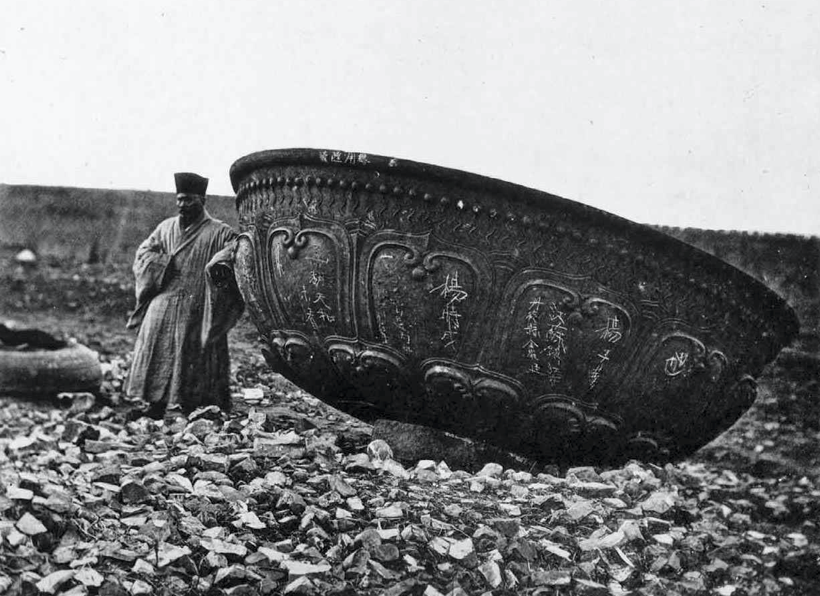
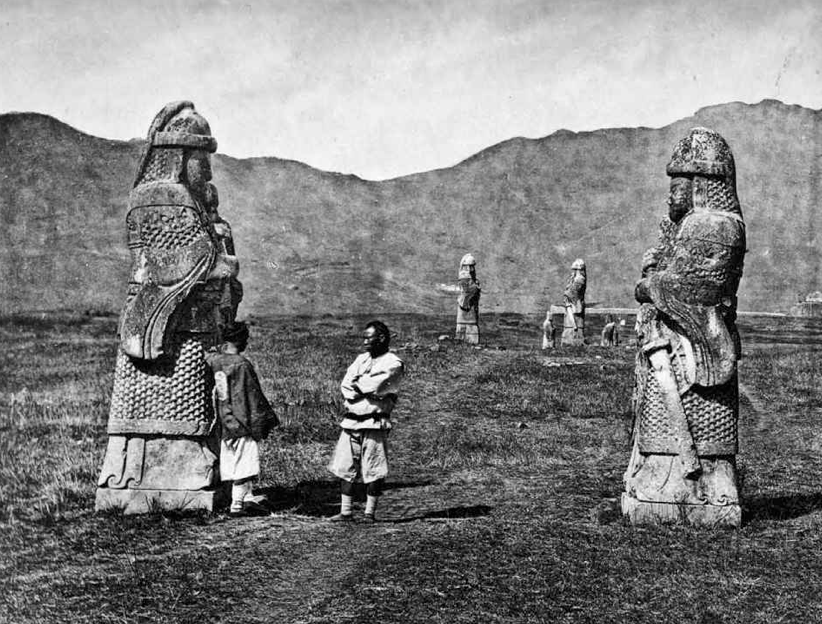
Why, then, do I find this sad? Because some people in the world genuinely understand one another. The East had wise observers—even in the late Qing, many officials understood Britain—and the West had its institutions of research. We tend to think that information a century ago was closed, and compared with today it certainly was. Yet human beings could still understand one another. Even in today’s highly connected internet world, however, we continue to see a “lack of understanding.” It has not decreased through faster exchange of information. Instead, more people “understand even less” or “choose not to understand.” This is genuinely sad.
04 — The End of Documentary Photography
I often wonder whether documentary photography has reached the end of its road. Everyone can now record anything with a phone, publish an opinion, and comment. The “reality” within documentary work has also changed considerably. What, then, is documentary photography recording?
It seems that we often forget the “concept of time” within documentation. Think about photographs from ten years ago—a period that is not especially distant in today’s developed society. Digital cameras already existed, but how many photographs from ten years ago can you still find? What happened and what changed now seem remote. With the appearance of short video and fast media, a popular event from last month is forgotten this month. So-called “documentary” work may not have recorded reality at all. Truly good documentary records remain too rare, partly because they lack continuity.
Finding “objectivity” in documentary work is also difficult. Although the book attempts to describe late Qing China objectively, it still contains Western “prejudices” and a “human zoo” view of exotic spectacle. I know this was difficult to control and cannot simply be called malicious, because China had indeed fallen behind at the time. For us, however—viewers in other countries will see these photographs from different positions—the images allow us to feel what “we” were like a century ago. They even reveal things whose essence has not changed, despite transformations in the external environment.
What is the purpose of documentary photography today? If we want to become “famous” through documentary work, it may be extremely difficult, perhaps impossible, under present conditions. But for “observing the world” and “expression,” documentary photography does not seem entirely dead. On the contrary, I believe it has simply returned to what it should have been.
05 — Finally
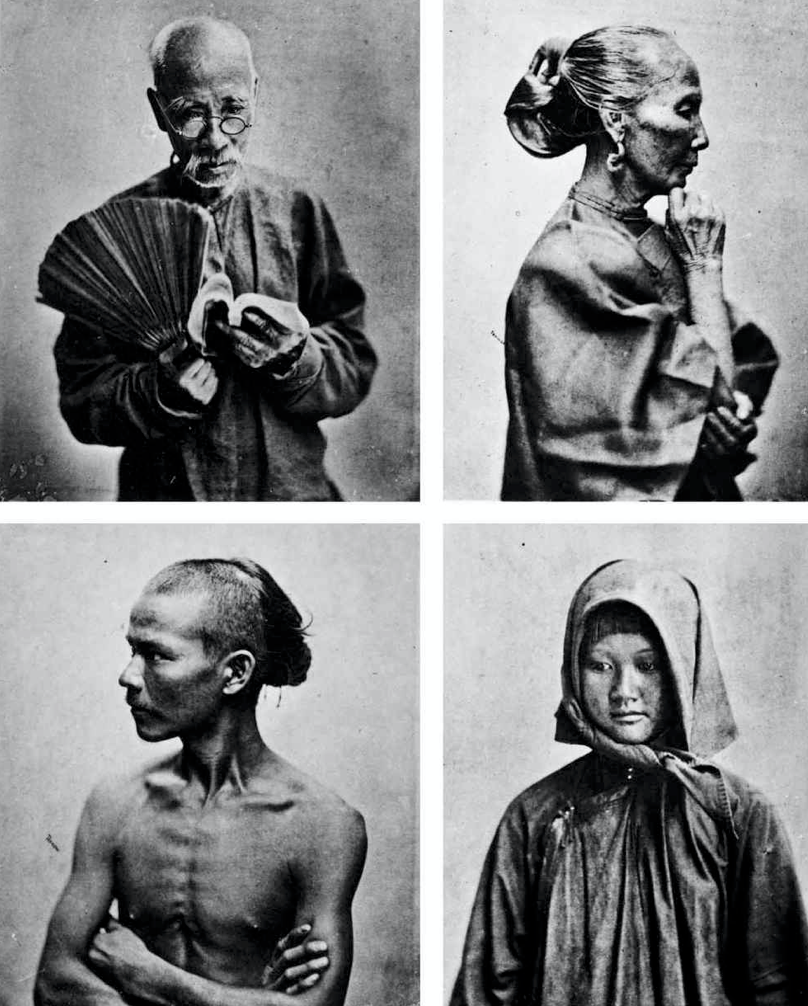
I still recommend reading this book. You will discover that things happening at that time also occur in the present. You can see workers, merchants, artists, men, women, mothers, and children. You can see how people struggled to live, hoped for the future, wanted their children to receive a good education, advised them to live steadily, looked down on opium smokers, and taught others to become upright people.
There was much that was wrong and needed to change. Yet we can also feel that certain good qualities within people have remained. Those unchanged qualities offer a measure of comfort.