
HOW I LEARN - What “Last Call” Teaches Me About Projects
An airport is a space shaped by waiting, departure, movement, and temporary stays. In Last Call, Harry Gruyaert uses vivid color and rigorous structure to turn seemingly ordinary airport moments into a photographic project charged with rhythm, time, and emotional tension.
Today, we are looking at Last Call by Belgian photographer Harry Gruyaert. Born in Belgium in 1941, Gruyaert studied photography and filmmaking. Before turning to color photography in his adopted city of Paris in the early 1960s, he worked as a director of photography on several films for Flemish television. He is now regarded as one of the masters of contemporary color photography.
To me, Magnum photographs usually possess a strong sense of life. This does not mean that Magnum only photographs war. When approaching everyday life, its photographers share the conviction that it, too, can produce excellent work—and they have the ability to do so.
Magnum recently featured Gruyaert’s Last Call. The title refers to the final airport announcement urging passengers to reach the gate before boarding closes. It captures the setting of the project with remarkable precision. Merely reading the words seems to summon an airport announcement: the plane is about to leave, and if you do not hurry, you will miss it. The title immediately creates tension.
01 - Strong Individual Photographs
Magnum’s requirements for a picture do not appear overly complicated. Compared with many art institutions, it seems to be a very pragmatic agency. Its basic demand may simply be: “Make a beautiful photograph.” Yet we all know that making a beautiful photograph is often the hardest task.
Magnum does not focus exclusively on war or changes in the street; some of its work is commercial. I believe Last Call may, to some degree, have begun as a commissioned assignment. Even viewed through that lens, however, the work remains full of life.
We often discuss what makes a photograph good. Today, the power of a single good image sometimes seems less important. Within a project, photographs may acquire a stronger narrative, the boundary between “good” and “bad” becomes less distinct, and the work as a whole can gain vitality.
Even so, many individual photographs in Last Call remain beautiful and emotionally powerful when removed from the project, without any consideration of sequence, rhythm, or the nature of the larger work.
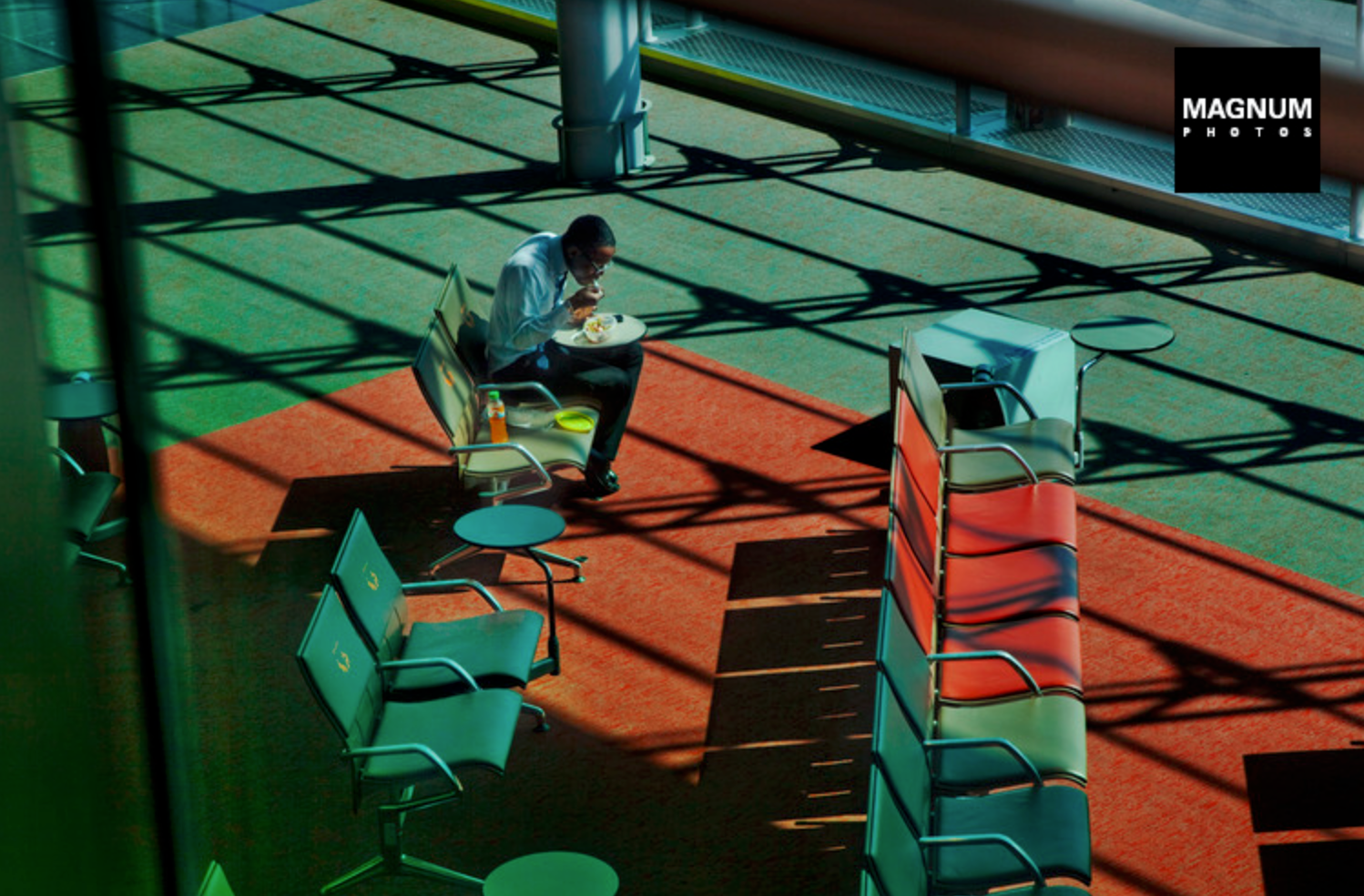
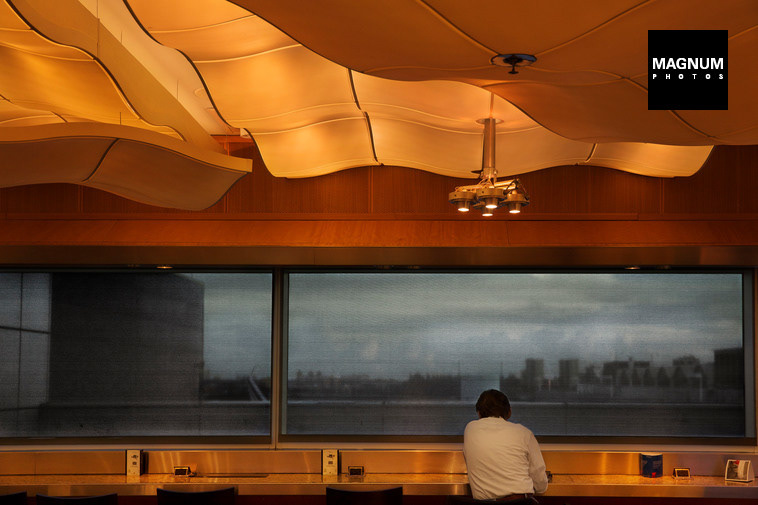
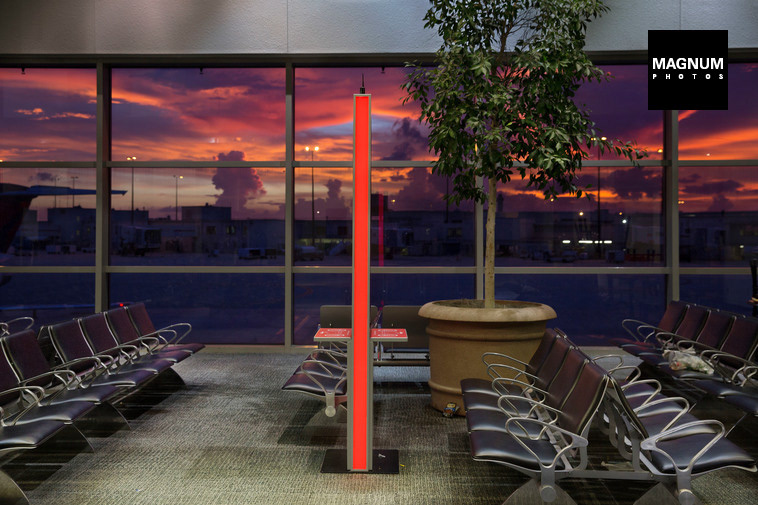
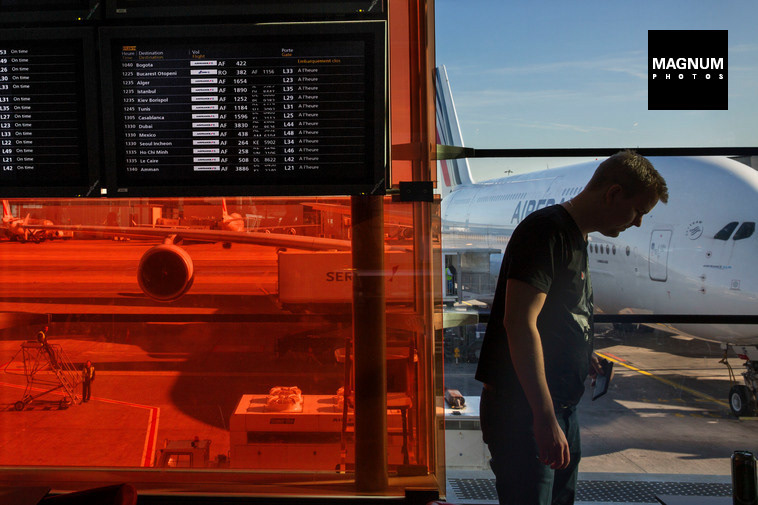
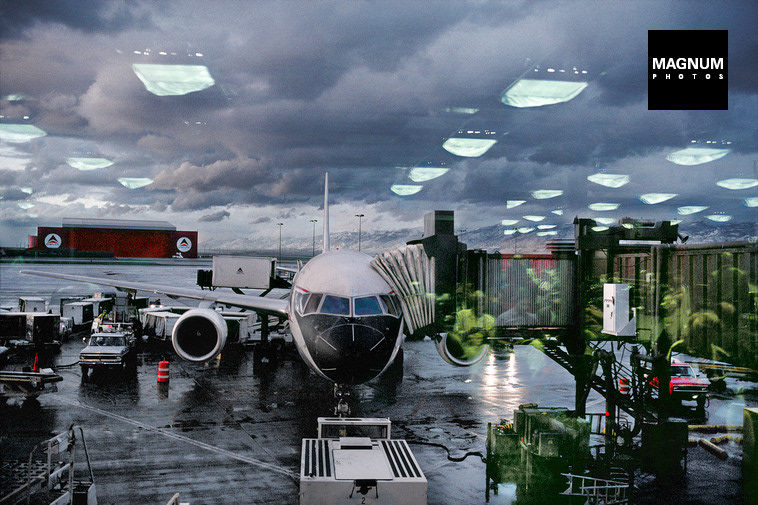
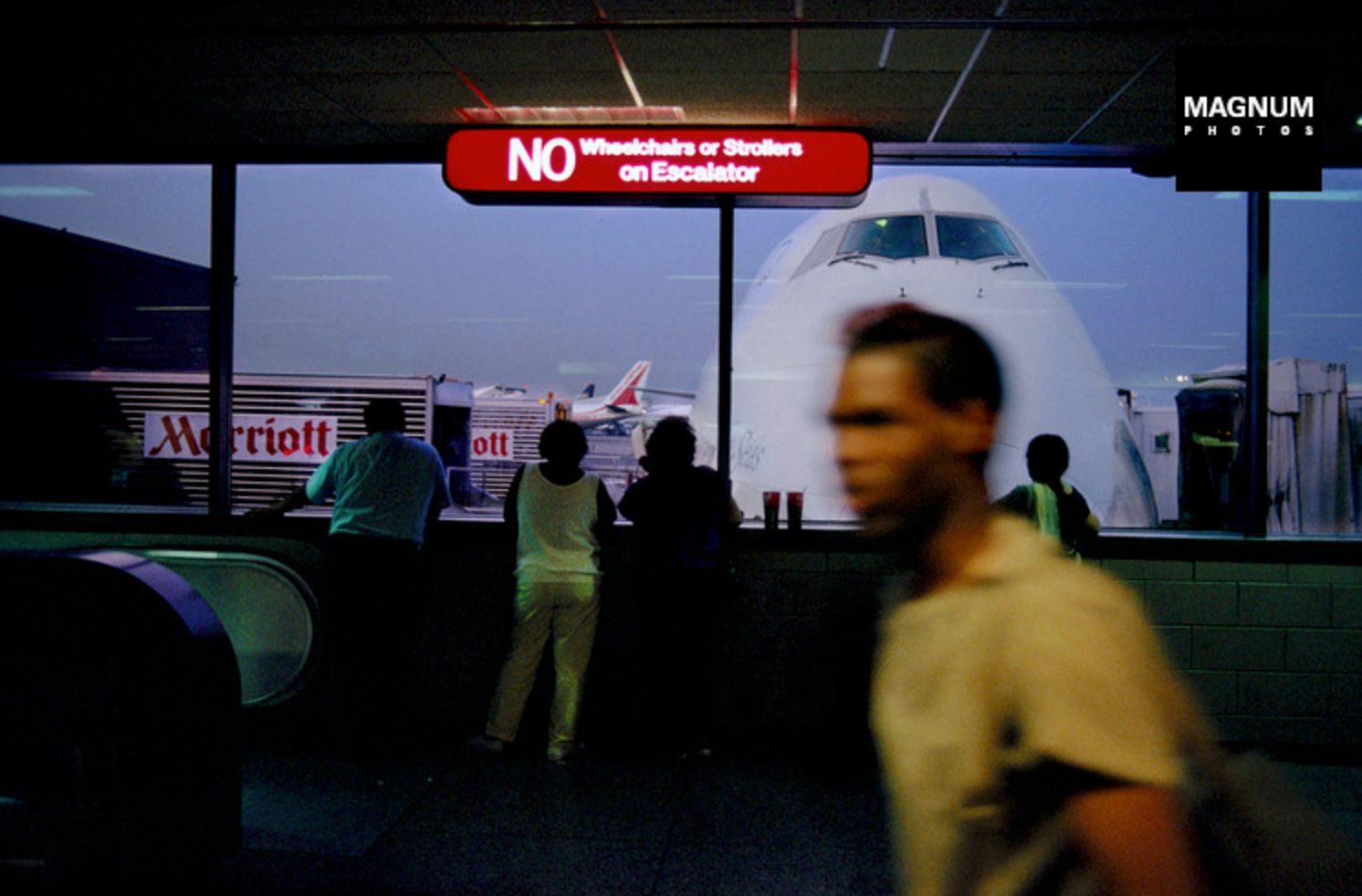
A careful reading of these images shows that, even when we do not treat them as parts of a project, they remain excellent photographs in their own right. Their color, structure, and narrative qualities fully convey the movement and balance between the people, events, and objects found in an airport. Skies and clouds in changing colors, together with aircraft receding into the distance, can also prompt thoughts and emotions about faraway places.
This is why I am always struck by the quality of Magnum’s collections. The photographs seem capable of withstanding sustained attention from every angle.
02 - Strong Project Design
From the perspective of project design, Magnum’s presentation of Last Call also offers much to learn. The individual photographs are already powerful, but when strong images are assembled into a project, they can easily compete for attention or create a confused rhythm. The selection and sequencing here remain exceptionally mature.
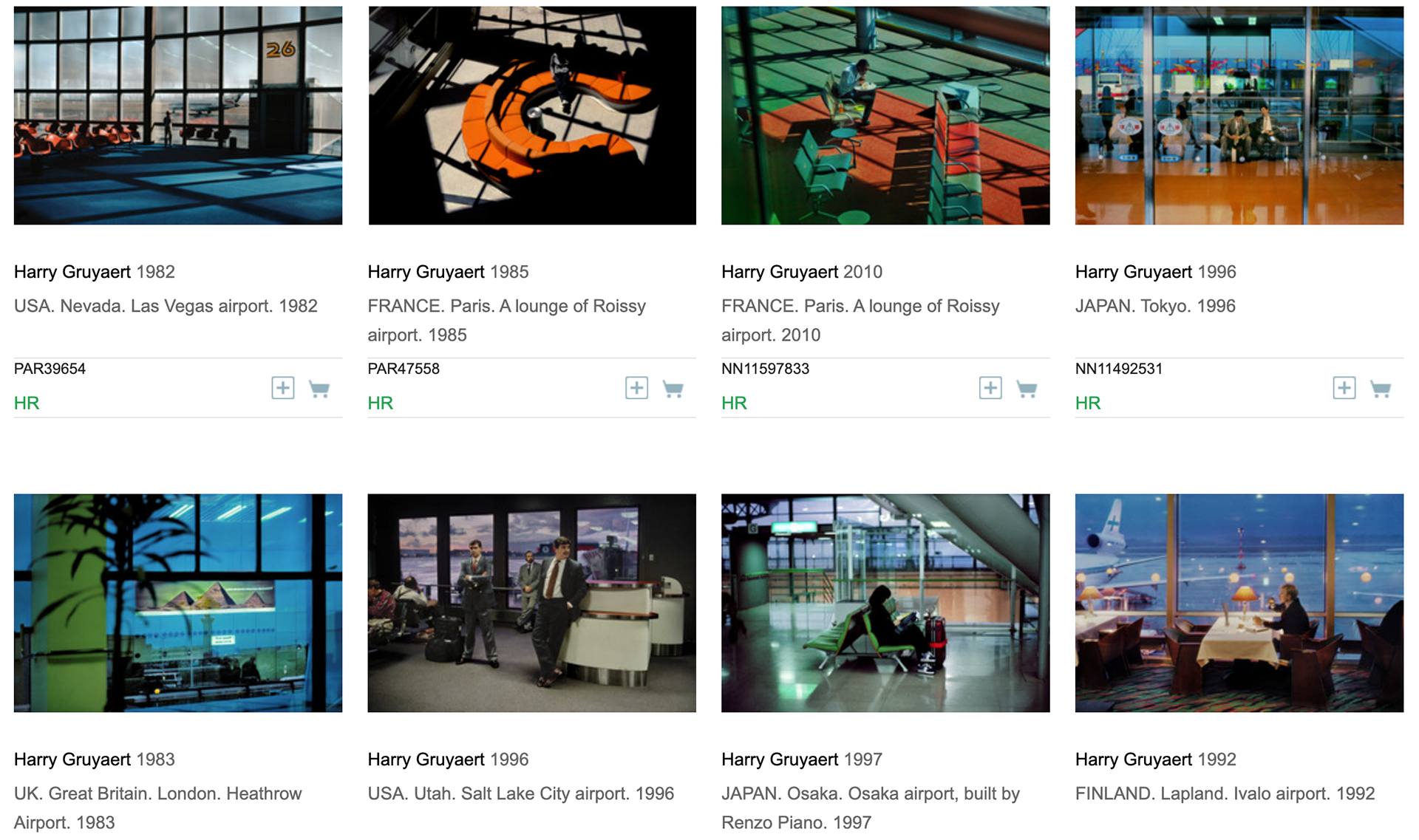
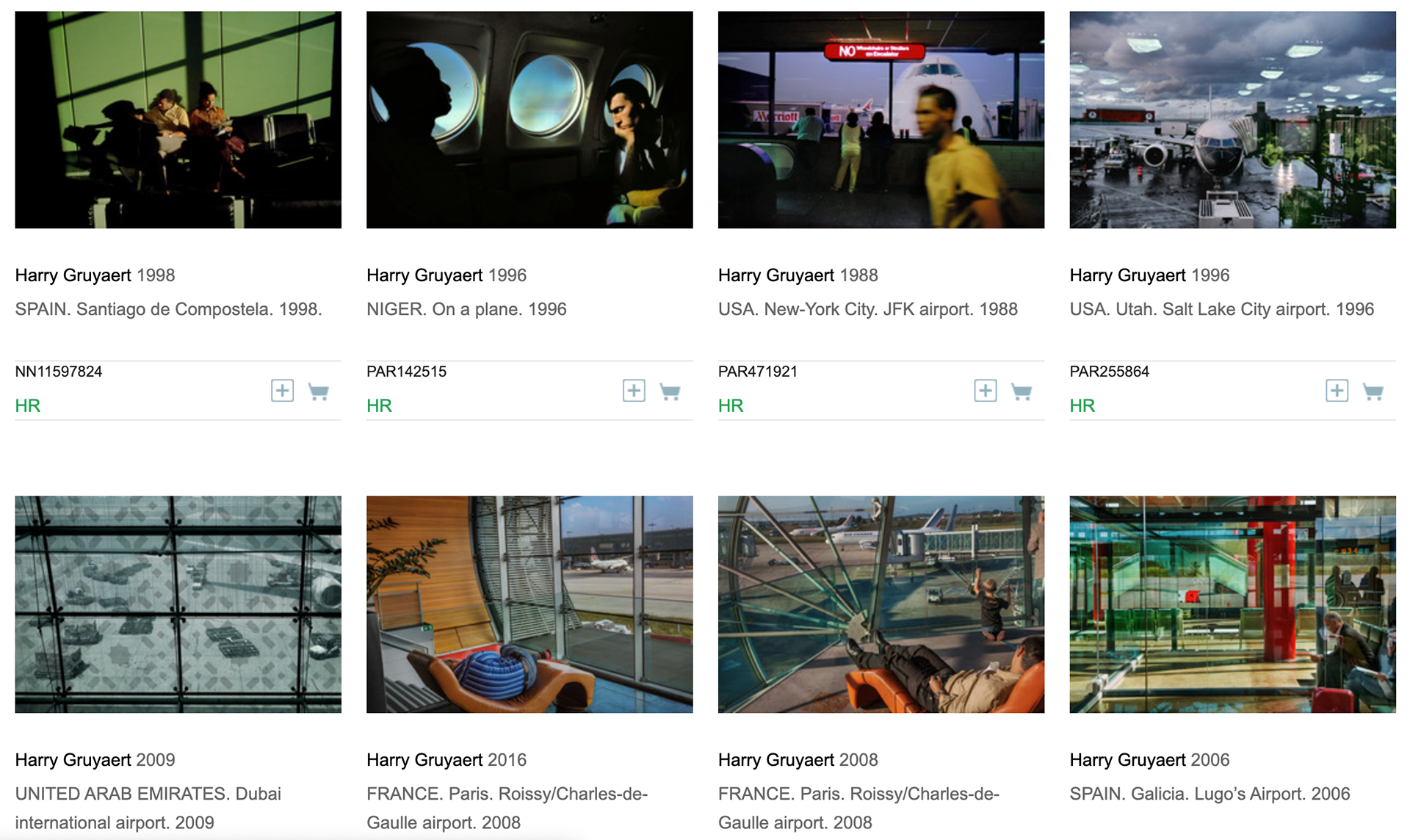
Several important features become visible:
- Every photograph is visually compelling on its own
- The photographs create an effective rhythm together
- The sequence varies between structure, color, and narrative
- The project spans a long period of time
Each point matters. Making a good photograph is important, and editing the rhythm of the full sequence is equally important. The duration of a project also influences its direction and final form. From one perspective, a strong long-term project gradually becomes a social activity and an act of social observation.
A long timespan gives a project many possibilities. What the photographer thinks on the final day may differ completely from what they thought when first raising the camera. As time extends, a simple narrative becomes more layered and complex. If this additional layer needs a name, it is “time.” Time turns individual frozen fragments into a collection of images that continues to move.
The project also reminds us that even an ordinary location such as an airport can sustain a complete photographic narrative over time, while still producing strong individual images and a coherent final project. It makes us ask whether our everyday photography overlooks nearby beauty and potential subjects, and whether we mistakenly treat photography as nothing more than documentation.
03 - Be Wary of the “Good” Photograph
When evaluating photographs, we may assume that good structure, color, and narrative will naturally contribute to a good project. Yet an image that appears excellent on its own can become unnecessary within the larger sequence.
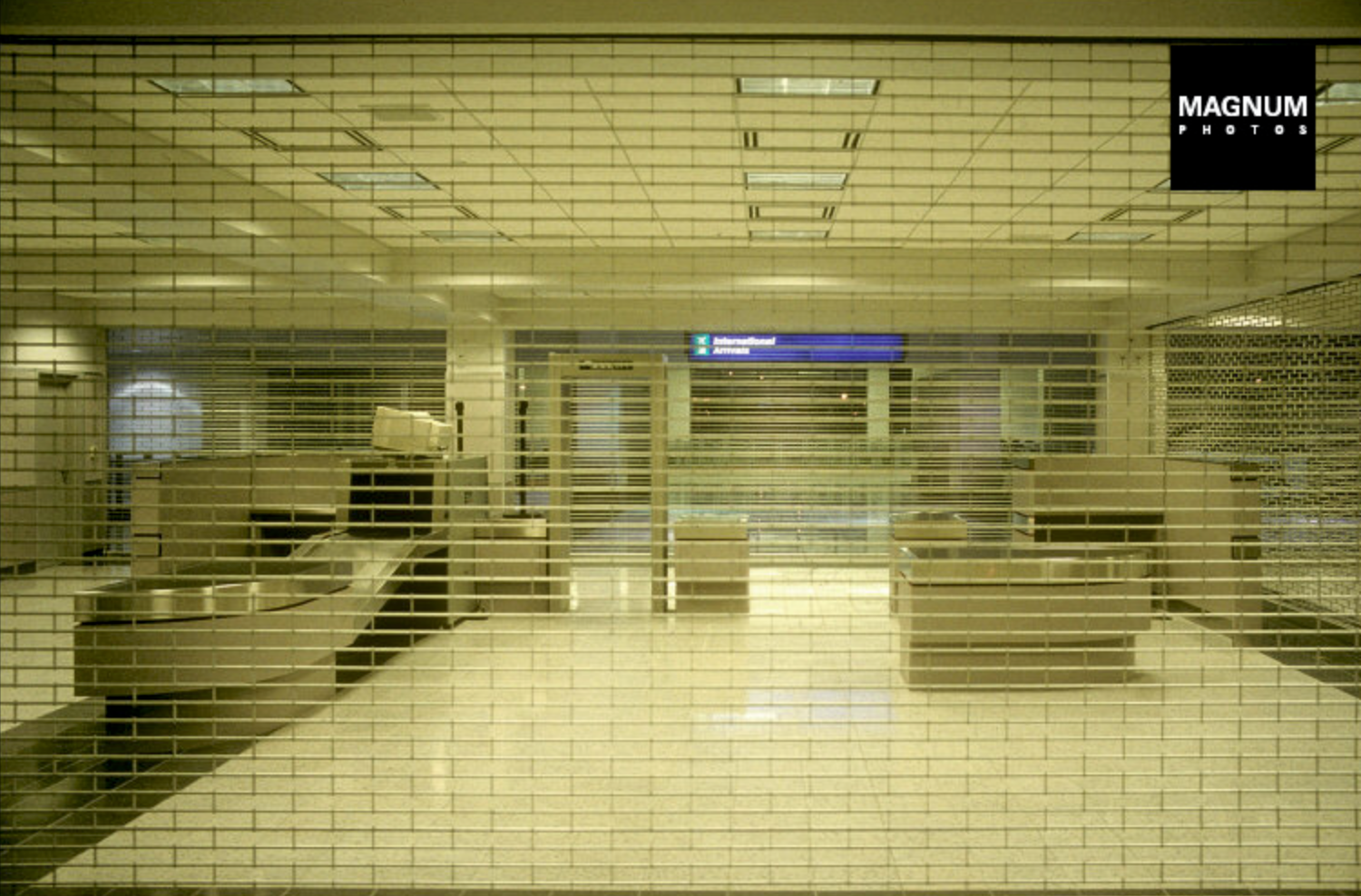
A “bad” photograph.
For many viewers, the photograph above may not appear good. It has no striking compositional structure, little color, and no obvious story. Does that necessarily make it a “bad” photograph?
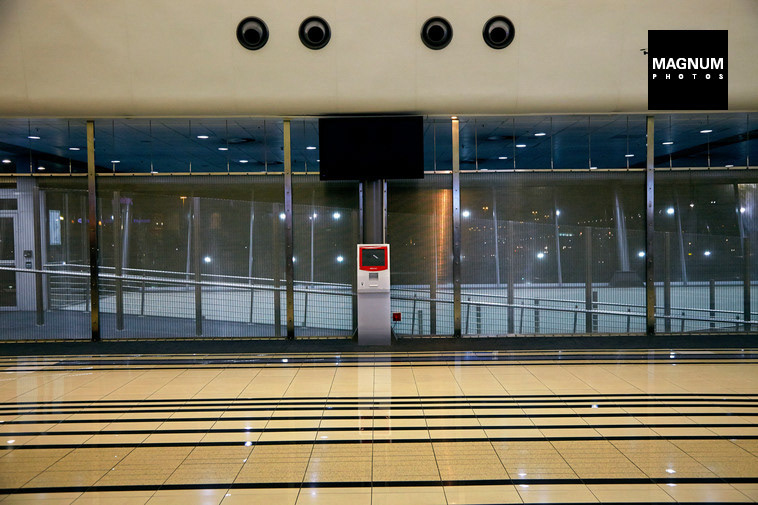
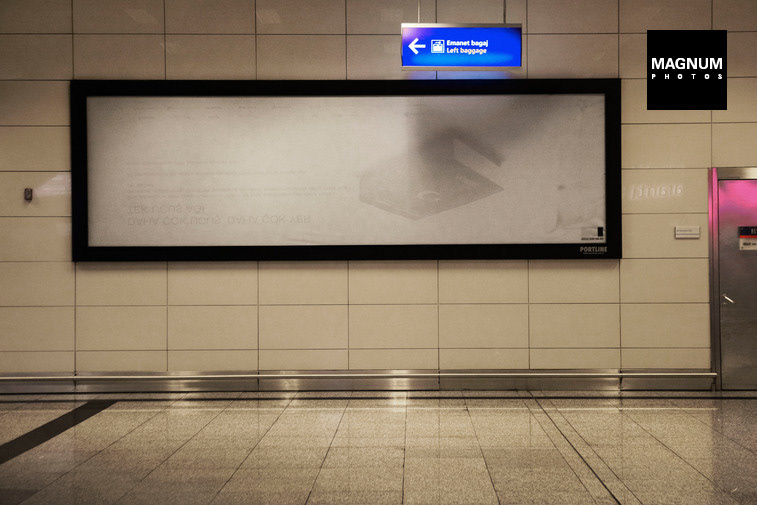
Placed beside other individual descriptions of still objects, it may no longer seem like a bad photograph.
Looking at the rhythm of the full sequence, we sense urgency: crowds respond to the last call and hurry toward their gates. At the same time, other things remain relaxed and still. These quieter images regulate the viewer’s emotions over the course of the project.
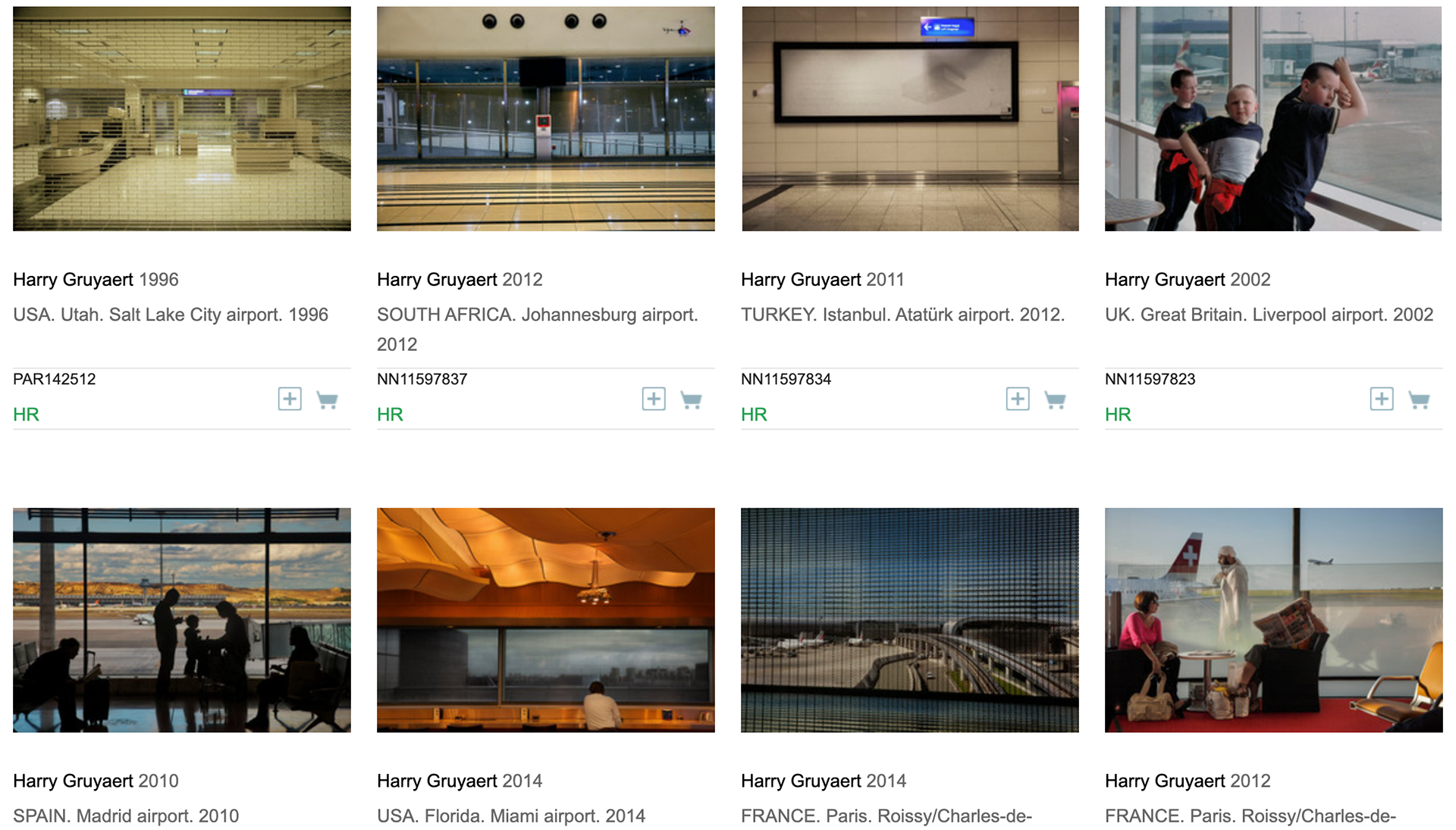
The rhythm of the project as a whole is equally important.
04 - Structure and Composition
As one of the best-known contemporary color photographers, Gruyaert has an exceptional command of color. In his photographs, color itself becomes part of the structure and composition. I understand structure and composition as arranging elements in the frame “just right”: nothing is superfluous, and nothing can be removed.
Black-and-white photography is comparatively simpler in this respect. By filtering out color, it naturally emphasizes certain structural qualities. Once the distraction of color disappears, viewers notice structure more readily. This is why some photographs look unattractive in color but improve when converted to black and white: the interfering colors have been removed.
Color also has its own balancing properties. Contrasting and complementary colors play important roles in maintaining visual equilibrium. An excessively bright or glaring color can easily disrupt that balance. Color photographs are therefore often more difficult to make than black-and-white ones, because color is itself part of structure and composition.
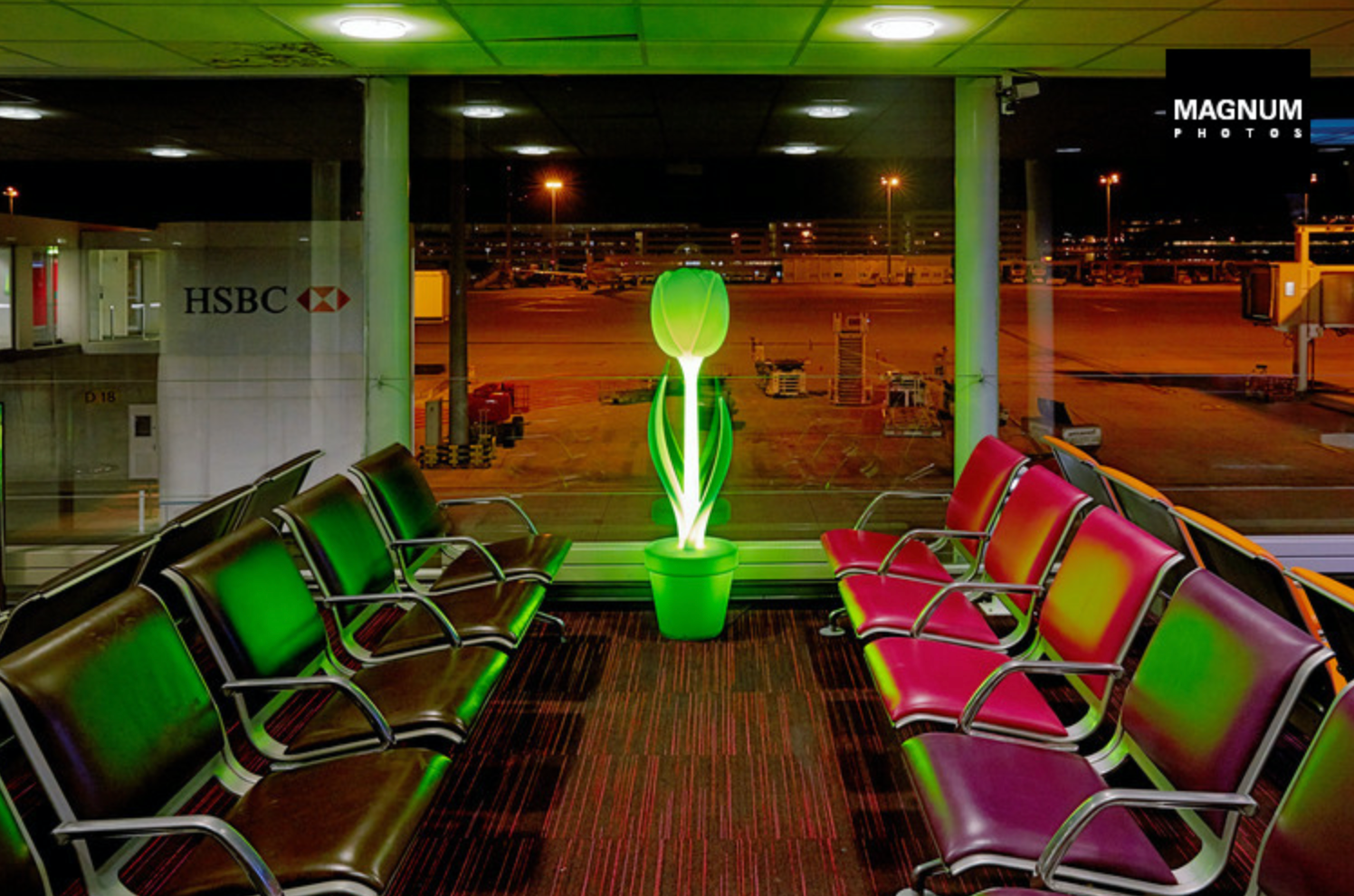
A distinct structure based on color contrast appears in the frame.
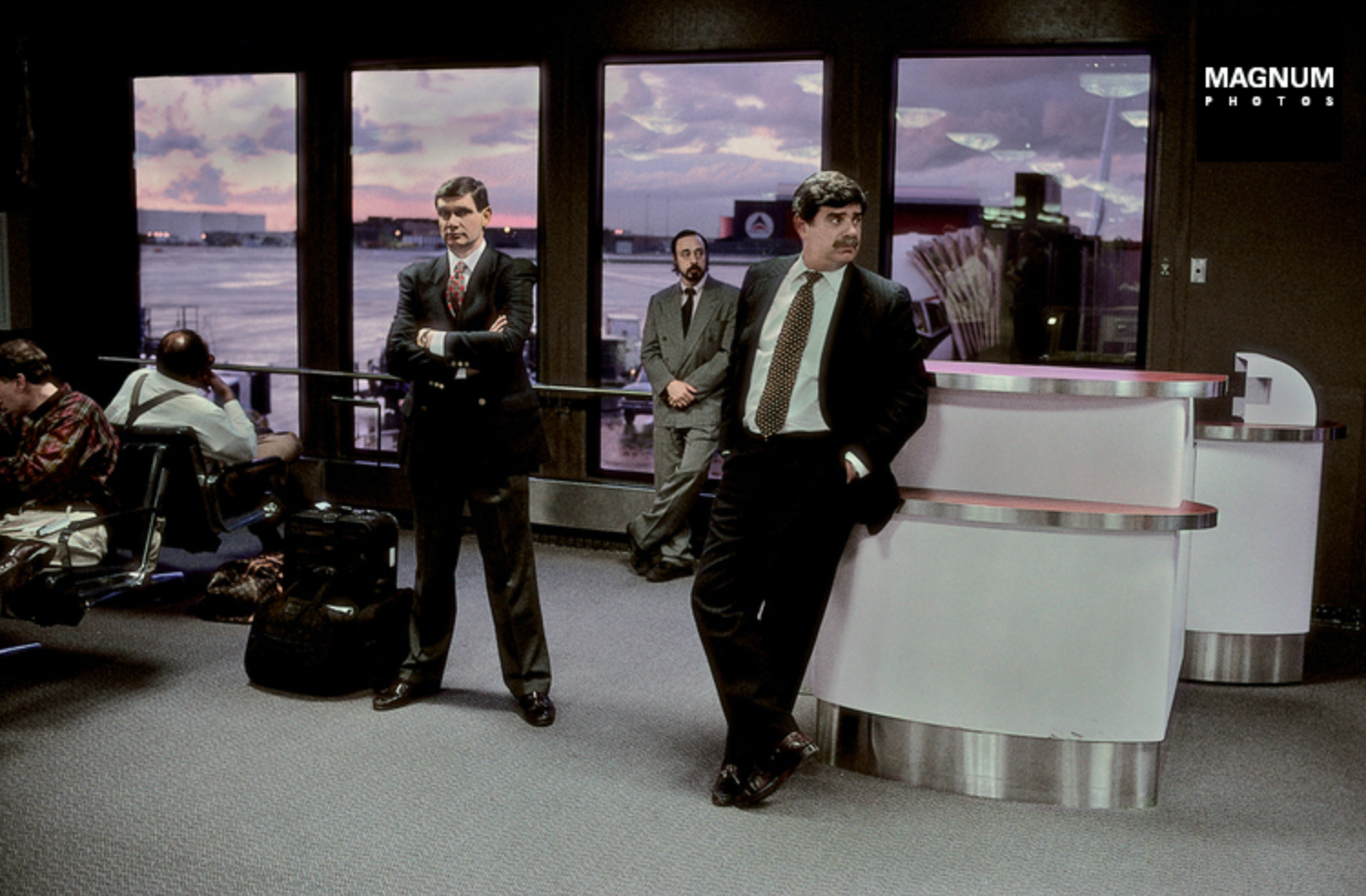
The purple background, gray foreground, and placement of the people combine to create the overall structure.
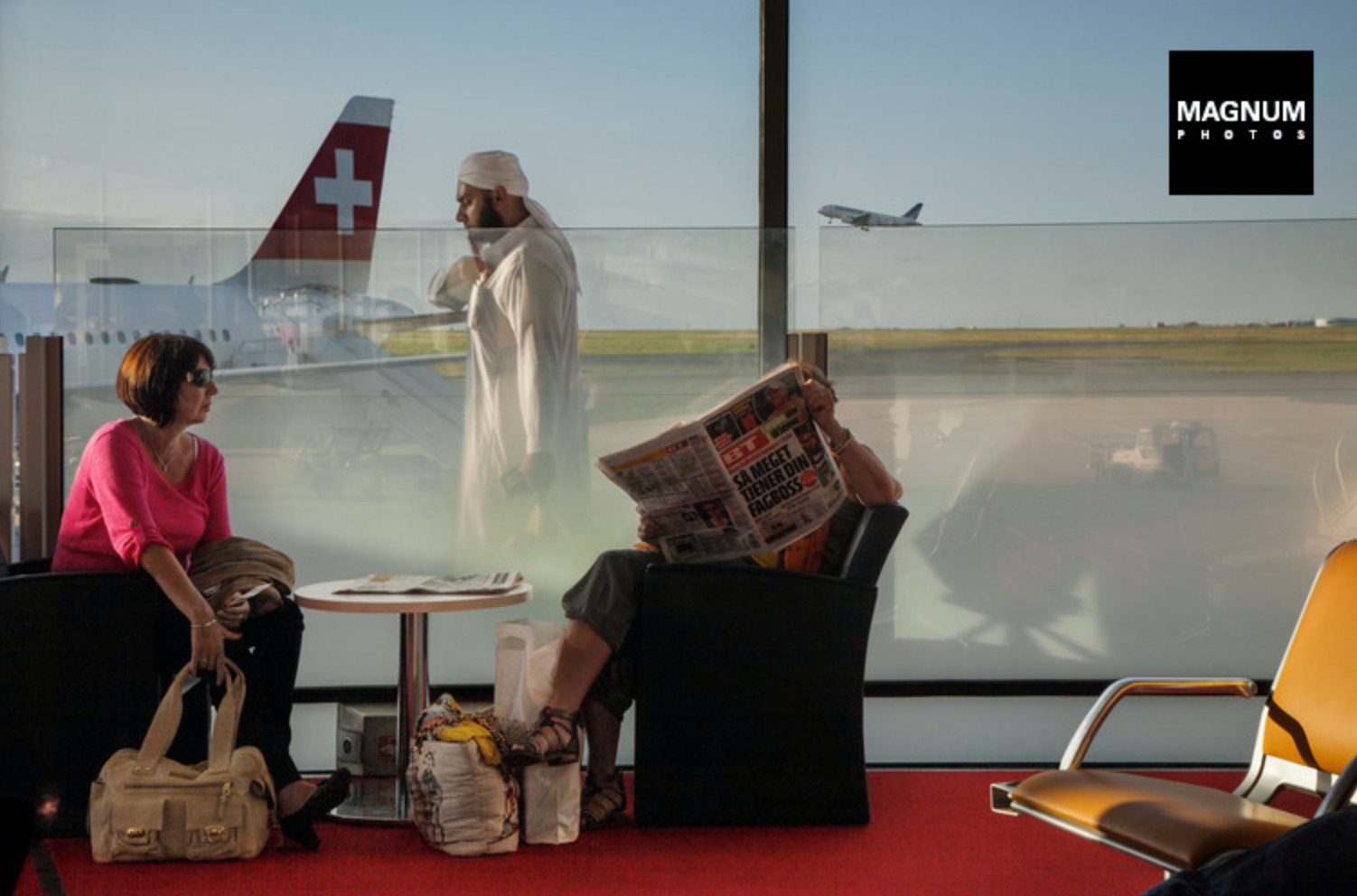
The passing figure in the background, the people in the foreground, the woman in sunglasses, and the woman reading a newspaper form a composition rich in narrative.
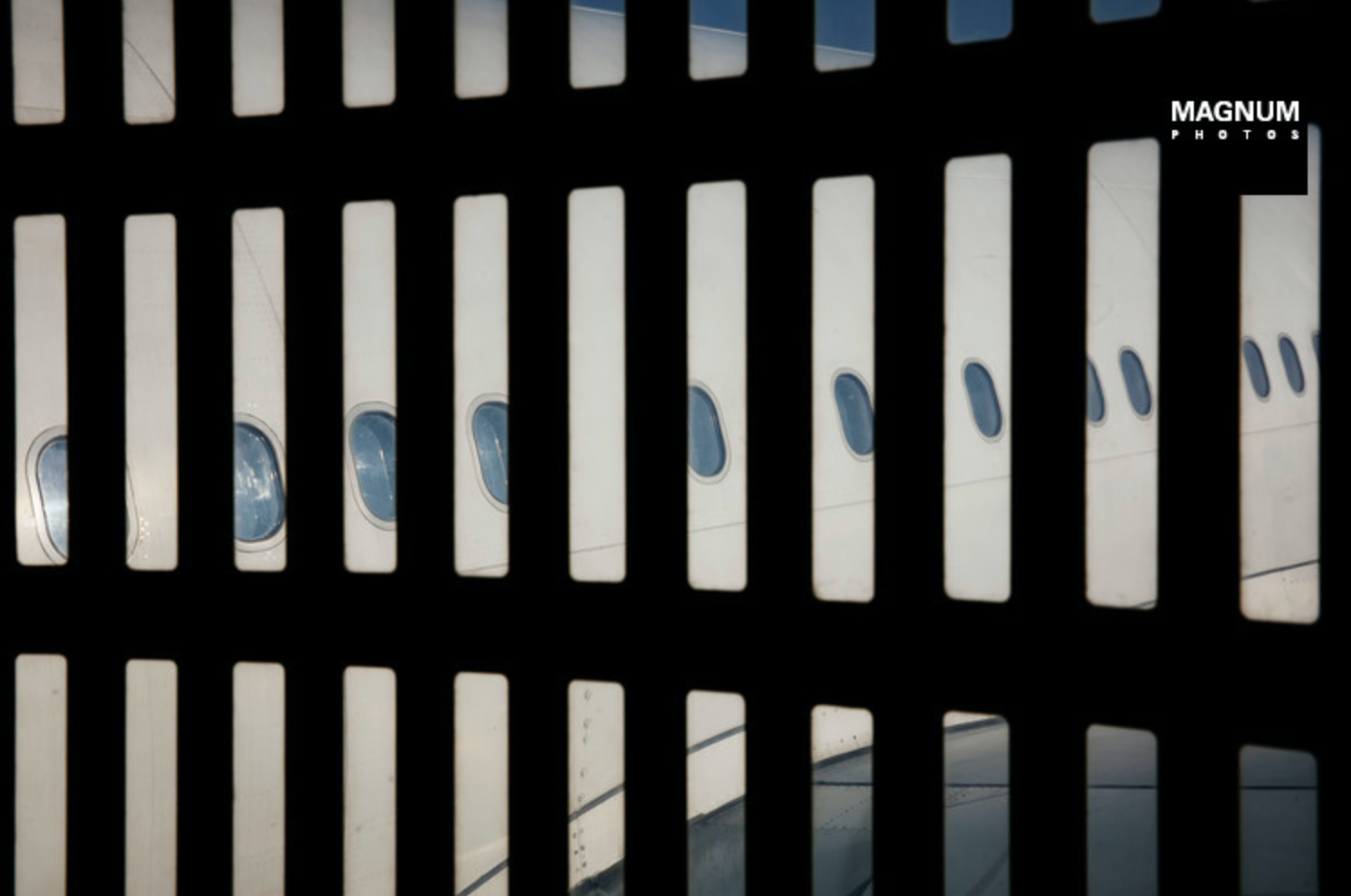
The intention behind the structure and composition is unmistakable.
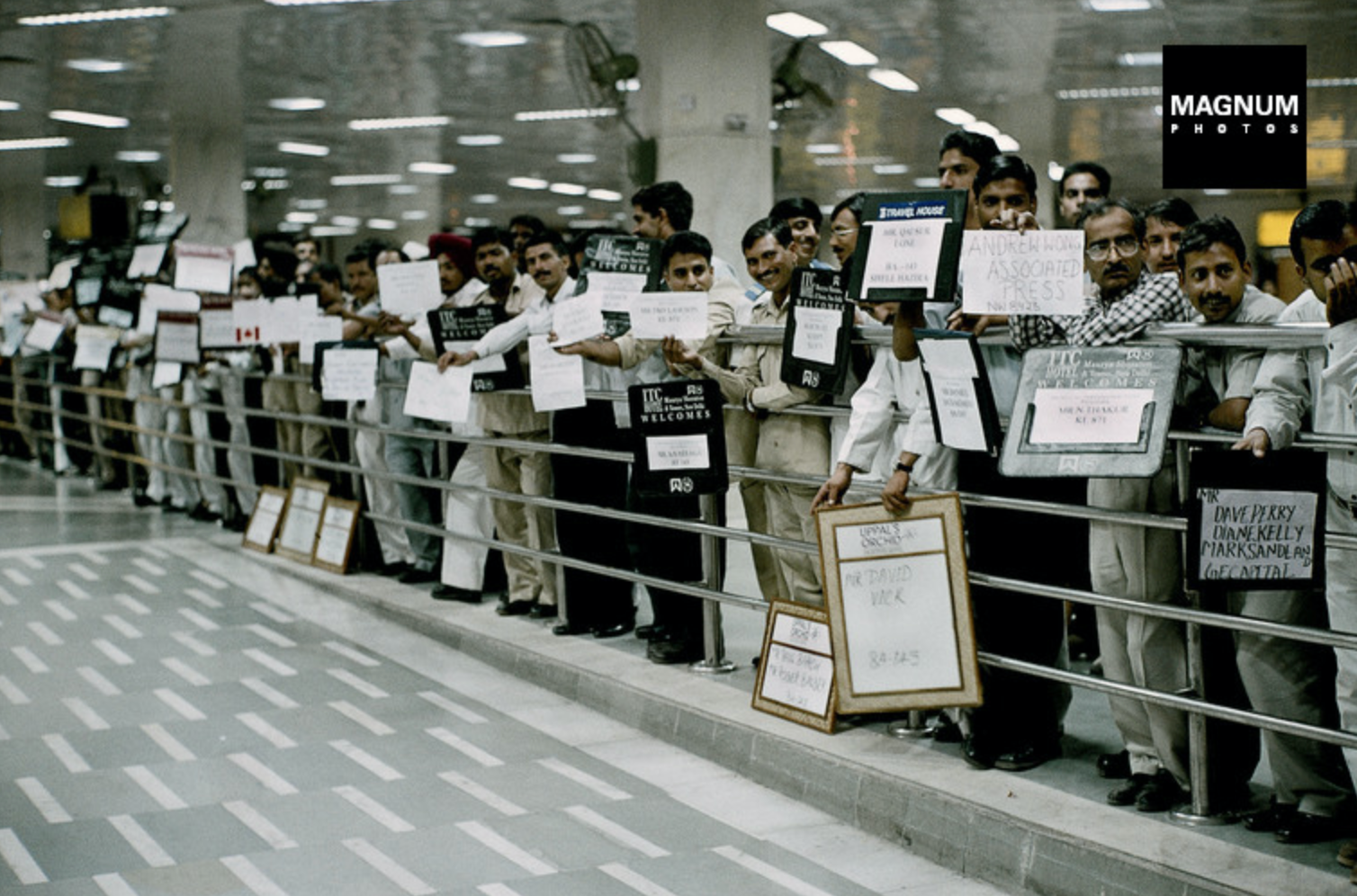
The white guiding line on the carpet, the white ceiling lights, and the signs held by the people stabilize the image.
05 - What We Can Learn
When photographing, we can think in terms of projects. A project does not need to be completed within a short period. Once we adopt this attitude, whether one particular photograph appears good or bad at a given moment becomes less important.
Good photographs certainly matter, but as we edit and organize a project, the quality of an individual image becomes less clear-cut. The relationship between photographs and the rhythm of the sequence demand more attention.
- Think in terms of a project
- Pay attention to the rhythm between photographs
- Extend the project over time
- Make beautiful photographs, with particular attention to structure, composition, and color balance
I have placed “make beautiful photographs” last because visually pleasing individual images are not necessarily the most important element in a complete project. From another perspective, however, if every photograph is excellent, the project will naturally feel more complete.
This essay has offered a brief account of my response to Last Call. Harry Gruyaert himself is also a photographer worth studying closely, and I hope to return to his work on another occasion.
Related link: